
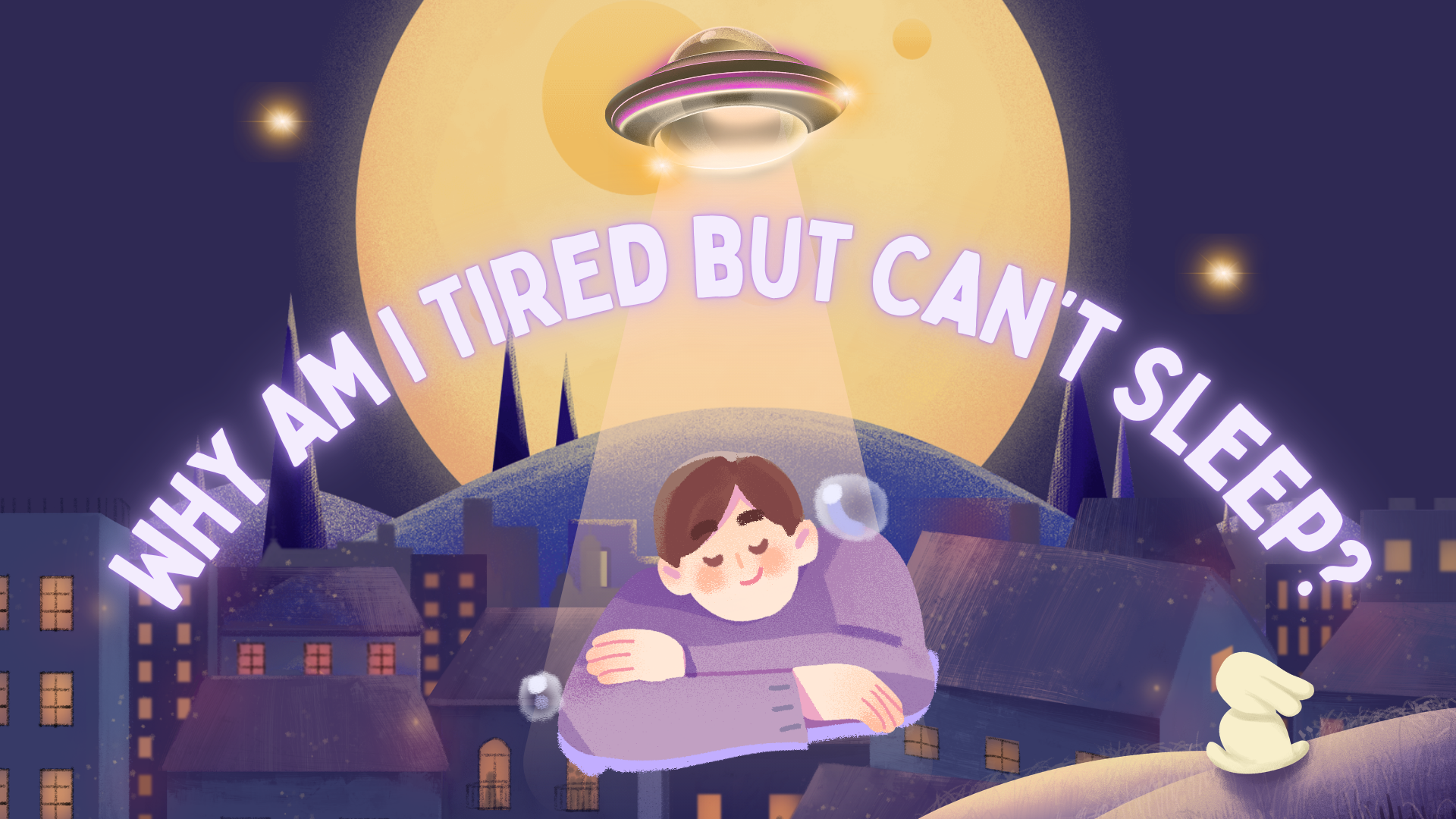
Why Am I Tired but Can’t Sleep?

There is something uniquely frustrating about being exhausted and still not being able to sleep. It feels unfair in a very specific way. Your body feels drained. Your mind feels used up. You can tell you need rest. And yet when night comes, instead of slipping into sleep, you find yourself lying there with a system that refuses to fully settle. You are tired enough to want sleep, but not calm enough to reach it. For a lot of people, this is the point where the question becomes urgent: why am I tired but can’t sleep?
What makes this pattern so confusing is that it seems contradictory. If the body is tired, shouldn’t sleep happen naturally? That is what most people assume. But in real life, tiredness and sleepiness are not always the same thing. A person can be low on energy, mentally drained, physically flat, and still have a nervous system that remains too alert, too stimulated, or too unsettled to move easily into deep rest. That is why so many people live in a loop where the day feels heavy and the night feels restless. They are not imagining it. They are dealing with a body that is exhausted and activated at the same time.
The reason this matters so much is that this pattern rarely stays contained to one bad evening. Once it starts repeating, it begins affecting everything else. Mornings feel weaker. Focus becomes less reliable. Mood becomes thinner. The next night becomes more pressured because you already know what happened the night before. Then sleep starts feeling like something you have to “make happen,” which only adds more tension to a process that works best when the body feels safe enough to let go.
The good news is that this usually has a pattern behind it. Once you understand why your body feels tired but not able to sleep, the whole thing becomes much less mysterious.
1. Your body is physically tired, but your nervous system is still switched on
This is one of the biggest reasons people feel exhausted without being able to sleep. The body and nervous system are not always moving in the same direction. You may be low on energy because of the day you had, the number of decisions your brain made, the amount of stimulation you absorbed, the tension you carried, or the poor recovery you have been accumulating over time. But if your system never properly shifted out of alert mode, sleep does not arrive as easily as it should.
That is the part people often miss. Sleep is not just about being tired enough. It is also about being settled enough. A body can feel worn out and still remain too mentally active, too overstimulated, or too tense to drop into rest smoothly. This is especially common in people who spend the entire day in response mode—messages, tabs, scrolling, work pressure, unfinished thoughts—and then expect the brain to power down immediately at night. If your mind has spent hours staying “on,” it often needs a transition. Without one, you can feel deeply tired and still be unable to sleep.
2. You are carrying the day into the night without realizing it
A lot of nighttime restlessness begins long before bedtime. It begins in the way the day ends. If your evening is filled with unfinished mental loops, digital stimulation, unresolved stress, or that constant feeling of “one more thing,” your brain does not get a clean signal that the active part of the day is truly over. It may look like you stopped working, but internally, your system may still be holding onto work.
That is one reason people often say they feel tired but not sleepy. What they are really experiencing is a body that wants relief and a mind that has not yet exited engagement. It might still be replaying conversations, anticipating tomorrow, thinking through tasks, or simply reacting to the final flood of input that happens before bed. Even if those thoughts do not feel dramatic, they keep the mind lightly active, and light activity is enough to delay real sleep.
This connects naturally with Why Am I Always Tired Even After Rest, because incomplete recovery often starts with a mind that never fully stops carrying what the day loaded into it.
3. Poor sleep quality from previous nights can make the next night harder
This is where the pattern becomes more frustrating. Once sleep quality has been weak for a while, the body can become both more tired and more sensitive at the same time. You would expect deeper fatigue to produce easier sleep, but that is not always how it works. Sometimes poor recovery creates more internal tension, more irritability, more mental noise, and a weaker ability to transition smoothly into rest.
In other words, bad sleep does not always make you more sleep-ready. Sometimes it makes you more wired, more reactive, and more likely to feel mentally “stuck” when bedtime arrives. That is one reason why do i feel tired even after sleeping and why do i feel tired even after sleeping 8 hours fit so strongly into this cluster. A person who is not recovering well at night often spends the next day low on energy, then reaches the next evening already carrying fatigue and nervous-system strain at the same time. That combination is exactly what creates the tired-but-can’t-sleep cycle.
4. Your brain is overstimulated, even if your body looks still
One of the biggest mistakes people make is assuming that stillness equals rest. You can sit in bed, lie on the sofa, or stop working physically and still be pouring stimulation into your brain. That is especially true if your evening includes fast content, endless scrolling, short-form videos, emotionally charged media, messages, or multiple screens.
The body may be technically inactive, but the brain is still responding, switching, anticipating, comparing, and processing. That keeps the nervous system in a lighter, more alert state than most people realize. It also explains why bedtime can feel confusing: your body is asking for sleep, but your brain is still interacting with a world that is telling it to stay available.
That is why so many people feel tired but not sleepy until the moment gets too late, and then they wake up the next morning wondering why they are still exhausted. This also links naturally with mental cloudiness explained because overstimulation weakens both rest and clarity.
5. Mental fatigue and sleepiness are not identical
This is a subtle but extremely important distinction. A lot of people use the words “tired” and “sleepy” as if they mean the same thing. They do not. Sleepiness is the body’s pull toward sleep. Fatigue is broader. It can include low energy, low motivation, mental fog, emotional flatness, physical heaviness, or the feeling that effort has become more expensive. A person can feel one without fully feeling the other.
That is why someone can say, “I’m so tired, but I’m not sleepy.” What they often mean is that their brain and body are underpowered, but their nervous system has not shifted into the softer state required for sleep. This is exactly where mental fatigue symptoms show up. If your day has been mentally demanding, emotionally loaded, or overloaded with input, the result may feel like exhaustion—without that clean sleep pull people expect.
This also explains why nighttime restlessness and daytime fog often belong to the same pattern. The body is not failing. It is simply tired in a different way than you assumed.
6. Stress does not always keep you energized—it can keep you awake while you are exhausted
People often imagine stress as something loud and obvious: panic, overwhelm, racing thoughts, anxiety you can clearly name. But a lot of real-life stress is quieter than that. It can sound like background concern, subtle pressure, unresolved tension, internal frustration, emotional effort, or the constant feeling that your mind never completely drops what it is holding. That kind of stress does not always make you feel “anxious.” Sometimes it just makes you feel tired and unable to relax properly.
That is why people who say, “I don’t even think I’m stressed, but I still can’t sleep,” are often overlooking how much hidden pressure their system is carrying. Stress does not need to be dramatic to affect rest. It only needs to remain present long enough to keep your body slightly activated. When that happens, your energy drops while your alertness stays strangely high. The result is familiar: you feel exhausted for no reason, and yet sleep still does not come naturally.
7. Your evening routine may be too abrupt
A lot of bodies do not move well from full engagement to full rest without a transition. This is especially true in modern routines where work, notifications, entertainment, and stimulation often continue right up until bedtime. If you go from being mentally active to expecting instant sleep, the body may not follow as quickly as you want it to.
This is not because something is wrong with you. It is because transition matters. The nervous system needs a chance to move from alertness toward calm. Without that, you may lie down physically while your system still feels like it is standing up inside. That gap between “I’m in bed” and “I’m actually ready for sleep” is where a lot of nighttime frustration lives.
It is also why this topic overlaps with why do i wake up tired every morning. Weak wind-down routines often lead to weak sleep, and weak sleep leads to tired mornings. Then the cycle keeps feeding itself.
8. Your body clock may be confused
Sometimes the tired-but-can’t-sleep problem comes down to timing rather than total fatigue. The body relies on rhythm. When sleep and wake times change too much, when evenings are too bright and active, or when mornings are too passive and dark, the circadian system loses some of its strength. That makes it harder for the body to know when it should be pulling strongly toward sleep and when it should be promoting alertness.
The result can feel backwards. You are low on energy during the day, then oddly more awake at night. You feel tired when you should be alert and alert when you wish you were tired. This is one of the reasons the question “why am I tired but can’t sleep” keeps repeating for so many people. The body is not just fatigued. It is out of rhythm.
9. Daytime habits may be making nighttime sleep harder
People often focus only on bedtime when trying to solve sleep problems, but daytime habits matter just as much. Too little movement, too much sitting, weak daylight exposure, unstable meal timing, too much caffeine too late, and constant digital fragmentation can all make nighttime rest harder than it should be.
That is because the body builds sleep pressure and rhythm throughout the day. When the day is physically flat but mentally overstimulating, the system often ends up in a strange middle ground—underactivated in the body, overactivated in the mind. That is a perfect setup for feeling tired all day and still being unable to sleep deeply at night.
This also connects with why am i sleepy all day because daytime drowsiness and nighttime restlessness often come from the same underlying imbalance rather than from separate causes.
10. You may be trying too hard to make sleep happen
This is one of the most human parts of the whole problem. After a few bad nights, sleep stops feeling automatic. You begin monitoring it. Thinking about it. Waiting for it. Measuring whether you are “doing it right.” That pressure creates a form of performance tension, and performance tension is not restful. The more effort sleep starts requiring mentally, the less naturally it tends to arrive.
This does not mean the problem is “all in your head.” It means the body responds to pressure. Sleep works best when the system feels safe enough to let go. The moment bedtime starts feeling like a test, the nervous system often becomes more alert instead of less. Then the person ends up even more tired the next day, which makes the following night feel even more loaded.
11. Sometimes poor focus, brain fog, and restlessness are all part of the same system problem
People often separate these experiences into different categories: bad sleep, poor concentration, low mood, daytime exhaustion, nighttime restlessness. In reality, they often belong to the same system pattern. A brain that never fully recovers becomes harder to focus with. A day filled with weak focus becomes more mentally tiring. A mentally tiring day makes the evening more stimulating. A stimulating evening makes sleep lighter. Then the next morning begins with less clarity and less energy than the day before.
This is one reason brain fog in the morning and why can’t i focus anymore belong close to this topic. A tired-but-can’t-sleep pattern is rarely just a bedtime problem. It usually affects the whole day before and the whole day after.
What actually helps first
The first helpful changes are usually more basic than people expect, but that is exactly why they work. Stronger evening transition. Less stimulation near bedtime. More daylight and movement during the day. Fewer late interruptions. A more stable sleep schedule. Less caffeine late. Less input when your body is already tired. More real breaks that calm the mind instead of feeding it more content.
It also helps to stop treating sleep like something you can force. The more useful question is not “How do I make myself sleep right now?” but “What is keeping my system from settling deeply enough to let sleep happen?” That shift matters because it moves the focus from pressure to understanding.
Final thoughts
If you are asking why am I tired but can’t sleep, the answer is usually not that your body is broken. More often, it means your system is exhausted and activated at the same time. Your energy is low, but your nervous system has not fully released the day. Your body wants rest, but your brain has not yet exited stimulation. The contradiction is real—but it is also understandable once you see the pattern behind it.
That pattern usually includes weak recovery, hidden stress, poor rhythm, overstimulation, mental fatigue, and a nervous system that has gone too long without enough quiet. Once you start supporting those areas, the whole experience often begins to change. Not instantly. Not perfectly. But enough for sleep to stop feeling like a battle and start becoming what it was meant to be: the place where your body finally gets to let go.
Leave a Reply