
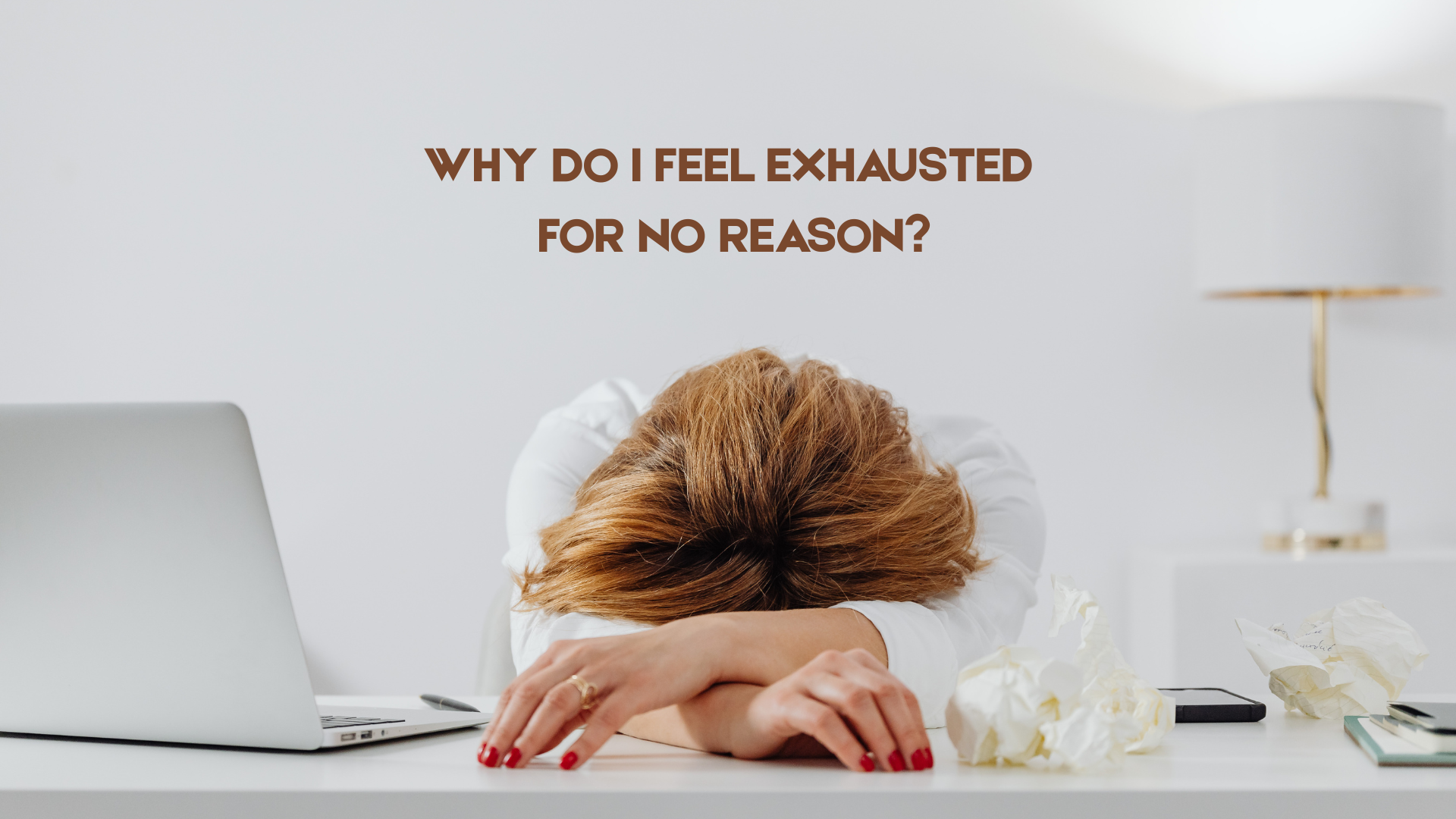
Why Do I Feel Exhausted for No Reason?
There is a kind of exhaustion that feels almost harder to explain than obvious tiredness. If you stayed up too late, worked too much, traveled, or pushed your body too hard, fatigue makes sense. You can point to something and say, “That’s probably why I feel like this.” But when you wake up, move through a normal day, and still feel worn out for no clear reason, the whole thing becomes more frustrating. You start questioning yourself. Maybe you assume you are being lazy. Maybe you tell yourself you just need more motivation, more discipline, or a better attitude. But in reality, people do not usually search why do I feel exhausted for no reason because they are avoiding work. They search it because the feeling is real, persistent, and hard to explain.
That is what makes this type of fatigue so draining in its own way. It is not only about low energy. It is about confusion. When exhaustion shows up without a clear cause, it can make everyday life feel strangely heavy. Small tasks feel larger than they are. Concentration gets weaker. Mood becomes flatter. Even things you normally handle without much effort can start feeling like they require a longer mental run-up. You may still function, still get through the day, still do what is needed—but everything feels as if it is costing more than it should.
Most of the time, that kind of exhaustion is not actually coming from “nowhere.” It only feels that way because the cause is usually not one big dramatic event. It is usually a group of smaller patterns hiding in plain sight: sleep that looks fine but is not restorative enough, stress that is quiet rather than obvious, constant mental switching, unstable energy throughout the day, not enough daylight, not enough movement, and a brain that never really gets the chance to slow down. When several of those things start stacking up at once, the body begins to feel exhausted long before the person fully understands why.
The encouraging part is that unexplained exhaustion usually leaves clues. Once those clues become visible, the problem stops feeling mysterious and starts becoming manageable.
1. Your body may be recovering less than you think
One of the most common reasons people feel exhausted for no reason is that they are resting, but not actually recovering deeply. These are not the same thing. A person can sleep enough hours, take breaks, and still feel depleted if the body never gets into a state where repair and restoration happen well enough. That is one reason so many people say they are exhausted all the time even though, on paper, they seem to be doing the right things.
Sleep quality matters far more than most people realize. If your nights are too light, too interrupted, too late, or too mentally active, your body may technically sleep without fully restoring energy. The result is subtle at first. You wake up a little slower. You need longer to get going. Your mind feels less steady than it should. Then, over days and weeks, that incomplete recovery starts showing up as the bigger feeling you are now trying to explain: why am I exhausted for no reason? If this sounds familiar, it connects closely with why do i feel tired even after sleeping and why do i feel tired even after sleeping 8 hours, because exhaustion without an obvious reason often begins with recovery that is weaker than it looks.
2. Hidden stress drains more energy than obvious stress
A lot of people assume stress has to feel intense in order to count. They think if they are not panicking, overwhelmed, or constantly anxious, then stress probably is not the issue. But some of the most exhausting forms of stress are actually the quieter ones. Ongoing responsibility. Mental pressure. Things left unresolved. Low-level worry about work, money, health, or the future. Emotional tension you keep pushing aside because nothing is “seriously wrong.” These are all forms of strain, and the body responds to them even when the mind tries to normalize them.
This is one reason a person can say, “I feel drained every day, but I don’t even know why.” The reason may not look dramatic enough to claim your full attention, but it is still expensive for the nervous system. Quiet stress keeps the body slightly activated, affects sleep depth, weakens mental clarity, and slowly lowers energy. Over time, the cost becomes visible not as obvious anxiety, but as exhaustion that feels strangely hard to explain. The body has been working harder than you realized just to carry what looked like “normal life.”
3. Mental fatigue can feel physical
There is a moment many people miss when they are trying to understand their energy. They assume exhaustion must be physical because that is how it feels in the body. Heavy limbs. Slow movement. Weak motivation. But some of the strongest fatigue people feel is actually mental fatigue that has spilled outward. The brain becomes overloaded, overstimulated, or under-recovered, and eventually the whole person feels tired.
This is why poor concentration, low motivation, brain fog, and physical fatigue so often show up together. They are not always separate issues. They may simply be different signs of the same exhausted system. A brain that is constantly switching, processing, reacting, and holding unfinished things in the background uses more energy than people think. At some point, the cost becomes visible. That overlap is exactly why this topic connects with mental cloudiness explained and why can’t i focus anymore. When the mind is mentally tired, the body often translates that into a full-body sense of exhaustion.
4. Your mornings may be starting from the wrong baseline
A lot of daily exhaustion gets blamed on what happened the night before, but sometimes the morning is making the whole thing worse. If the day starts passively—with dim indoor light, no movement, immediate phone use, little hydration, and a slow transition out of bed—the body can remain in a half-awake state much longer than it should. Instead of interrupting the tiredness, you extend it. And when that weaker state becomes part of the daily pattern, the whole day feels flatter.
This is one reason some people feel as though they never fully “arrive” in the day. They are awake, yes, but not fully switched on. That feeling can easily be interpreted as exhaustion for no reason, when in reality the reason may be that the body did not get strong enough signals to move into alertness in the first place. This is why do i wake up tired every morning matters so much in this cluster, and it is also why the habits in Morning Mistakes Most People Make keep showing up as part of the bigger fatigue conversation. Weak mornings create weaker days.
5. Your energy may be unstable even if you don’t feel “hungry”
Another hidden cause of unexplained exhaustion is unstable fuel. People often associate food problems only with obvious hunger, but the body can be under-fueled or poorly fueled long before it starts sending loud hunger signals. Irregular meals, long gaps without food, too much caffeine early, fast carbohydrates without enough balance, and energy crashes disguised as “afternoon tiredness” all contribute to that drained feeling people struggle to explain.
This is especially common when someone feels fine for a short while, then suddenly becomes much more tired than the day should justify. The body does not always say, “You are hungry.” Sometimes it says, “You are exhausted.” That is because the brain and nervous system need a steadier supply of usable energy than most people realize. If the fuel pattern keeps rising and falling all day, the person often experiences the result as constant fatigue rather than as a food issue. This is one of the reasons low energy all the time and unexplained exhaustion are so closely connected.
6. You are spending too much time indoors, under-stimulated physically and overstimulated mentally
This combination is more common than ever. The body gets too little movement, too little daylight, too little real activation—but the brain gets too much input, too much screen time, too much mental fragmentation, and too much shallow stimulation. That mix creates a very specific kind of exhaustion. The body feels dull. The mind feels cluttered. Alertness feels weak, but the nervous system never feels deeply calm either.
The frustrating part is that this can happen even on days when you were not “busy” in the classic sense. You may have been sitting, scrolling, checking, responding, switching between tasks, staying indoors, and mentally processing all day long. The body did not get the signals it needed to feel awake. The brain did not get the quiet it needed to recover. By evening, the whole system feels worn out. That is one of the most common hidden answers to the question why do I feel exhausted for no reason: your life contains enough friction to drain you, just not in ways that look dramatic.
7. You may be mistaking stimulation for energy
This is one of the easiest traps to fall into because it works just well enough to be convincing. Coffee helps. Sugar helps for a while. Constant activity helps. Scrolling helps distract you from the heaviness. Music, noise, background media, urgency, and pressure can all create the feeling of temporary alertness. But alertness and real energy are not the same thing. A person can feel “more awake” for an hour and still be deeply under-recovered overall.
The problem starts when stimulation becomes the main strategy. The body begins to depend on borrowed energy instead of building steady energy. That usually leads to a cycle of short boosts and harder crashes. The person ends up feeling exhausted again and again, then assumes the solution is just more stimulation. In reality, the system is asking for better recovery, not louder input. This is one reason why am i sleepy all day can overlap so much with unexplained exhaustion. Daytime drowsiness and all-day exhaustion often grow from the same unstable energy pattern.
8. Broken attention creates real exhaustion
Many people still underestimate how tiring it is to live in constant interruption. Each time you switch tasks, glance at a message, check a notification, move between tabs, or interrupt yourself to think about something else, the brain has to reorient. That reorientation has a cost. It may be small each time, but repeated all day long, it becomes a major energy drain.
This is one reason people often say, “I don’t even know why I’m so tired—I didn’t do that much today.” They may not have done one hard thing deeply, but they did dozens of small things in fragments. The brain did not get the satisfaction of sustained concentration. It only got a long day of shallow resets. Over time, that creates a very real kind of exhaustion, one that feels both mental and physical by the time the day ends. In many cases, the body is not reacting to too much work. It is reacting to too much fragmentation.
9. Emotional pressure may be taking more out of you than you think
Not all exhaustion comes from workload. Some of it comes from inner pressure. Trying to keep everything together. Trying not to disappoint people. Trying to stay useful, kind, productive, responsive, calm, and responsible at the same time. Emotional effort is effort. Just because it happens silently does not mean it is cheap.
This kind of strain is especially draining because it rarely gets proper recovery time. People often rest from work, but they do not rest from emotional self-management. They keep thinking, monitoring, replaying, and carrying. Then they feel exhausted for “no reason,” when the reason is simply that their system has been supporting more internal weight than they were willing to name. A body can only carry that for so long before the exhaustion starts showing up in more obvious ways.
10. You may have adapted to feeling drained
One of the most difficult parts of constant fatigue is that it becomes familiar. Once that happens, you stop seeing it clearly. You stop comparing how you feel now to how you used to feel before the exhaustion became normal. You build your days around it. You allow extra time to wake up. You assume you need more caffeine. You avoid harder tasks earlier. You tell yourself it is just adulthood, just stress, just life, just the season, just being busy. All of those things can contain a little truth, but they can also hide how much your baseline has really shifted.
This matters because once the body adapts to exhaustion, you no longer treat it like a signal. You treat it like identity. That is when people start saying, “I’m just always tired,” instead of asking what is actually making them feel that way. But exhaustion rarely becomes permanent because the body is “just like that.” More often, it becomes familiar because the underlying drains have gone unaddressed for too long.
What usually helps first
People are often disappointed by how unglamorous the first useful fixes sound. Better sleep quality. More consistent mornings. Better hydration. More daylight. More movement. Less screen stimulation late at night. More stable food timing. Fewer interruptions. More real breaks instead of restless distractions. Better emotional honesty about what is actually draining you. None of this sounds dramatic enough to explain major exhaustion. That is precisely why it works. The body is often affected most strongly by the basics people keep underestimating.
The goal is not to do everything perfectly. The goal is to stop stacking so many small drains on top of one another. Once the body is no longer paying for sleep disruption, quiet stress, weak mornings, unstable fuel, broken attention, and overstimulation all at once, energy often begins returning faster than people expect.
Final thoughts
If you feel exhausted for no reason, the reason is usually there. It is just not always loud. It may be hiding in weak recovery, hidden stress, mental overload, low daylight, inconsistent food, underhydration, shallow focus, or the emotional pressure of trying to function well while feeling off. None of those explanations are dramatic, which is why people often overlook them. But the body does not need dramatic causes to become deeply tired. It only needs enough daily friction for long enough.
That is why the right question is not “Why is this happening out of nowhere?” The better question is “What has been quietly taking more out of me than I realized?” Once you ask it that way, the pattern usually begins to reveal itself. And when the pattern becomes visible, exhaustion stops feeling like a mystery and starts becoming something you can actually work with.

Leave a Reply