
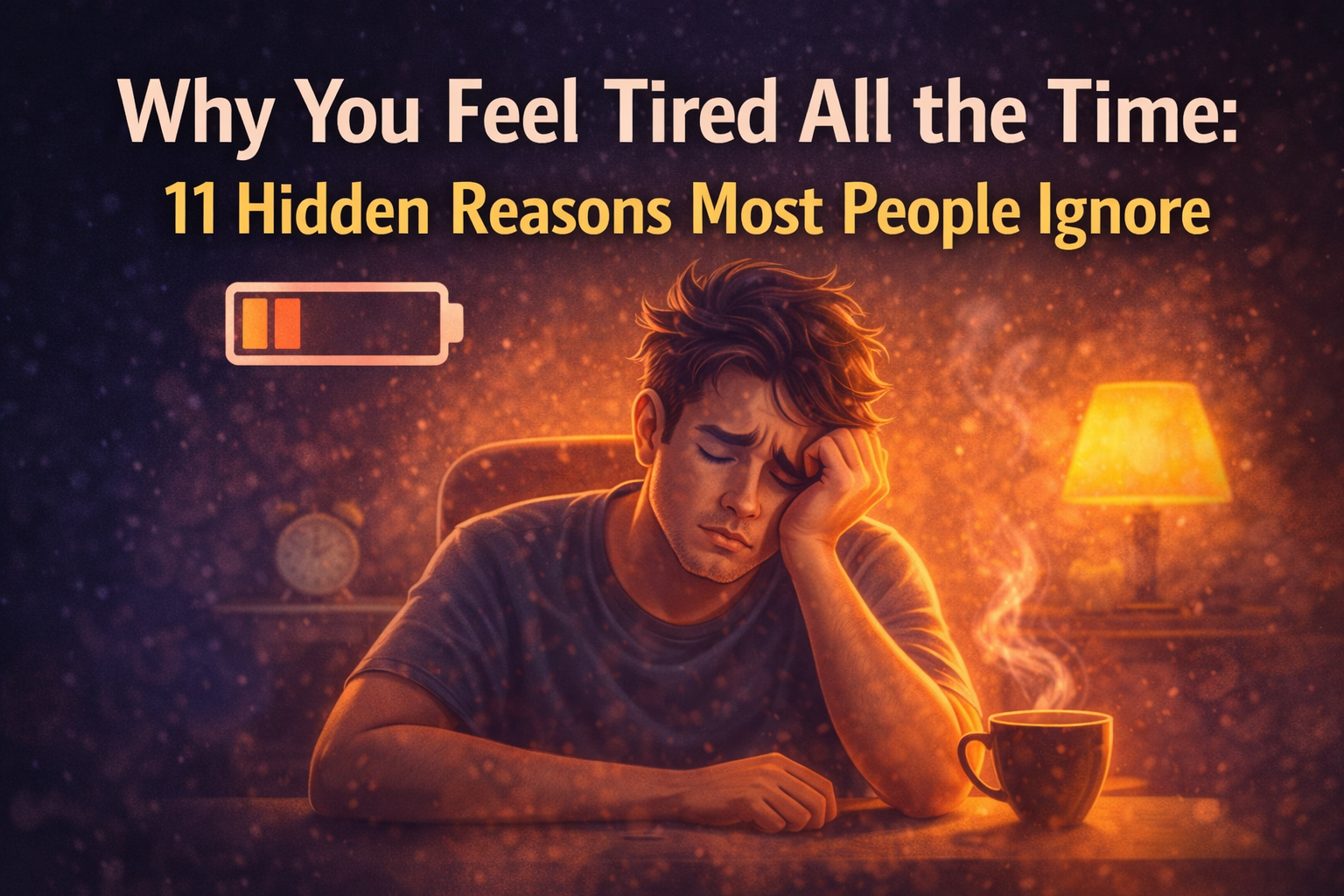
Why You Feel Tired All the Time: 11 Hidden Reasons Most People Ignore
Almost everyone experiences tiredness from time to time. But if you constantly feel drained, sleepy, or mentally exhausted even after a full night’s sleep, something deeper might be happening.
Many people assume fatigue is simply caused by lack of sleep, but the truth is far more complex. Your lifestyle, diet, stress levels, and even hydration can play a significant role in how energetic you feel throughout the day.
In this article, we’ll explore 11 hidden causes of constant fatigue and what you can do to fix them.
Constant tiredness doesn’t just affect your body — it also impacts your concentration and memory. Many people who feel drained throughout the day also struggle with mental cloudiness explained, a condition that makes it harder to stay focused and productive.
1. Poor Sleep Quality
Sleeping for 7–8 hours doesn’t always mean you’re getting quality sleep.
Disruptions like:
- Blue light from phones
- Irregular sleep schedules
- Noise or light disturbances
- Late-night caffeine
can stop your brain from reaching the deeper sleep stages where the body properly restores energy.
Quick Tip
Try to keep a consistent sleep schedule and avoid screens at least 1 hour before bed.
2. Dehydration
When the body lacks enough fluids, people often start feeling tired, develop headaches, and notice their focus slipping.
Water plays a major role in circulation, helping move oxygen and nutrients throughout the body so cells can function properly. Without enough fluids, your body must work harder, which can make you feel tired.
Signs of dehydration
- Dry mouth
- Headaches
- Dark yellow urine
- Low energy levels
Simple fix: Drink 2–3 liters of water daily.
3. Too Much Sugar in Your Diet
Sugary snacks provide a quick burst of energy, but they also cause a rapid energy crash shortly after.
This rollercoaster of blood sugar spikes and drops can make you feel even more exhausted.
Instead, try eating:
- Whole grains
- Nuts
- Fruits
- Protein-rich foods
These provide steady, long-lasting energy.
4. Lack of Physical Activity
It may seem strange, but not moving enough can actually make you more tired.
Regular physical activity improves:
- Blood circulation
- Oxygen delivery
- Mood
- Energy levels
Even 20 minutes of walking daily can significantly improve your energy.
5. Stress and Mental Overload
Chronic stress drains your mental and physical energy.
When you’re constantly worrying about work, finances, or responsibilities, your body remains in “fight-or-flight” mode, which leads to exhaustion over time.
Practices that help reduce stress include:
- Meditation
- Deep breathing
- Journaling
- Spending time outdoors
6. Iron Deficiency
Iron helps your blood carry oxygen throughout your body. Without enough iron, your body struggles to produce energy efficiently.
Common symptoms include:
- Fatigue
- Pale skin
- Shortness of breath
- Dizziness
Iron-rich foods include:
- Spinach
- Lentils
- Red meat
- Pumpkin seeds
7. Poor Gut Health
Your gut plays a bigger role in energy than many people realize.
An unhealthy gut microbiome can affect:
- nutrient absorption
- immunity
- brain function
- energy levels
Adding probiotic foods like yogurt, kefir, and fermented vegetables can help support gut health.
8. Too Much Caffeine
Many people rely on coffee to stay energized. However, too much caffeine can actually make fatigue worse.
Excess caffeine can:
- Disrupt sleep
- Cause anxiety
- Lead to energy crashes
Try limiting caffeine intake to 2 cups per day and avoid it after 3 PM.
9. Vitamin Deficiencies
When important vitamins are lacking in the body, a persistent feeling of tiredness can often appear.
Common deficiencies linked to tiredness include:
- Vitamin B12
- Vitamin D
- Magnesium
Getting regular sunlight and maintaining a balanced diet can help maintain proper vitamin levels.
10. Excess Screen Time
Constant exposure to digital screens can mentally drain your brain.
Screen fatigue can cause:
- eye strain
- headaches
- reduced focus
- mental exhaustion
Taking regular screen breaks every 30–60 minutes can help restore your energy.
11. Irregular Eating Habits
Skipping meals or eating at inconsistent times can disrupt your body’s energy balance.
Your body needs regular fuel to function efficiently.
Try maintaining consistent meal times with balanced portions of:
- Protein
- Healthy fats
- Complex carbohydrates
When to See a Doctor
If fatigue continues for weeks despite lifestyle improvements, it may indicate an underlying health condition such as:
- thyroid imbalance
- chronic fatigue syndrome
- anemia
- sleep disorders
Consulting a healthcare professional is recommended if symptoms persist.
Final Thoughts
Feeling tired all the time is not something you should ignore. Often, the causes are hidden within daily habits like poor sleep, dehydration, stress, or diet choices.
The good news is that small lifestyle adjustments can make a huge difference. By improving sleep quality, staying hydrated, managing stress, and maintaining balanced nutrition, you can restore your natural energy levels.
Your body constantly communicates with you — and persistent fatigue is one of its strongest signals that something needs attention.

Leave a Reply