
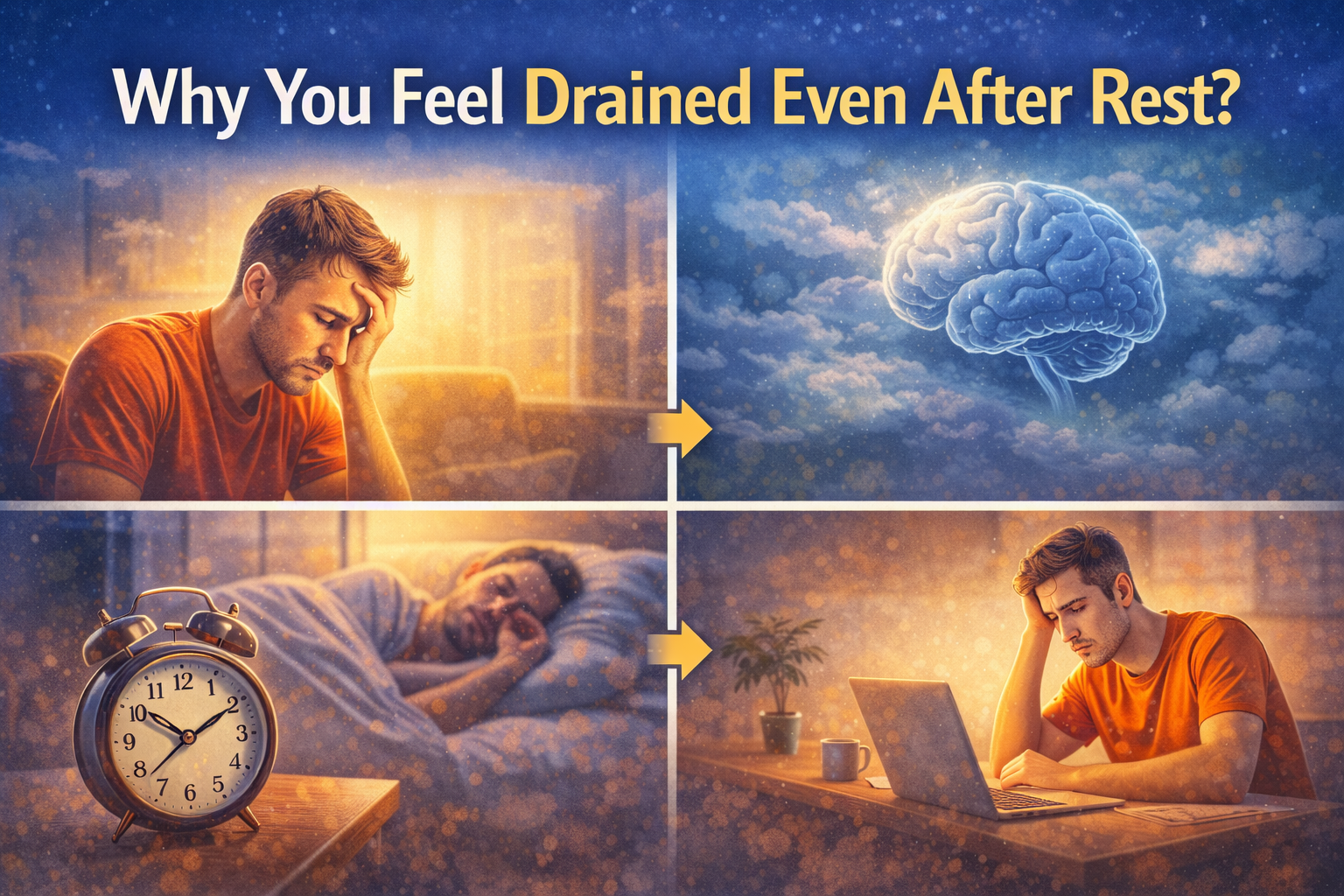
Why You Feel Drained Even When You’re “Resting”: 10 Quiet Signs Your Body Needs Real Energy Recovery

Many people assume exhaustion only appears after extreme work, sleepless nights, or intense physical effort. In reality, fatigue often builds quietly over time.
The body has a remarkable ability to continue functioning even when energy reserves begin to decline. Because of this, people frequently overlook early warning signals.
Instead of dramatic symptoms, the first signs usually appear as small changes in mood, focus, sleep quality, or physical comfort.
Modern routines can easily contribute to this gradual energy drain. Long hours indoors, constant digital exposure, inconsistent meals, and mental stress all affect how efficiently the body produces and maintains energy.
When these factors accumulate, the body starts sending subtle signals that something needs attention.
Recognizing those signals early can help prevent deeper exhaustion and allow you to restore balance before fatigue becomes overwhelming.
Below are several overlooked signs that your body may be asking for recovery.
1. Mornings Feel Slow And Heavy
One common early signal appears right at the beginning of the day.
Some people wake up and immediately feel alert. Others notice that getting started requires considerable effort.
Even after what should be a full night of sleep, the body may feel sluggish or unprepared for the day ahead.
This doesn’t necessarily mean sleep duration is insufficient. Sometimes the issue relates to inconsistent sleep patterns or evening habits that interfere with deep rest.
Establishing a stable morning routine can help reset the body’s internal rhythm.
If mornings consistently feel difficult, learning from Morning Routine That Changes Your Life may help build habits that support stronger daily energy.
2. Your Mind Feels Slower Than Usual
Low energy often affects the brain before people notice physical fatigue.
You might find yourself rereading the same paragraph multiple times or struggling to organize simple thoughts.
Tasks that normally require minimal effort—like planning a schedule or solving a small problem—may take longer than expected.
This experience is often described as mental fog.
When the brain lacks sufficient energy, concentration naturally becomes less efficient.
If this pattern occurs frequently, understanding mental cloudiness explained can help clarify why thinking sometimes feels less sharp.
3. You Lose Interest In Activities You Normally Enjoy
Energy strongly influences motivation.
When reserves are low, even enjoyable activities may feel less appealing. Hobbies, exercise, or creative work might suddenly feel like obligations rather than sources of enjoyment.
This shift often happens gradually. At first it might simply feel like a temporary lack of enthusiasm.
However, when energy levels improve, interest in those same activities often returns naturally.
4. Simple Decisions Feel More Difficult
Another subtle sign of fatigue appears in decision-making.
Choosing what to eat, deciding how to organize tasks, or responding to messages may suddenly require more mental effort.
The brain consumes a surprising amount of energy during daily decision-making. When energy levels drop, even small choices can feel draining.
Many people respond to this by postponing decisions or avoiding tasks altogether.
Recognizing that low energy may be influencing these feelings can help you respond more effectively.
5. Your Energy Drops Suddenly In The Afternoon
A mild afternoon slowdown is common for many people.
However, when energy drops dramatically every day, it may indicate underlying habits that need adjustment.
Possible contributing factors include irregular meals, insufficient hydration, or limited physical movement during the day.
In some cases, chronic fatigue develops slowly because these habits continue for long periods without correction.
Exploring why you feel tired all the time can provide deeper insight into the lifestyle patterns that sometimes contribute to ongoing fatigue.
6. Your Body Feels Tight Or Stiff
Energy depletion does not only affect mental clarity. The body also reacts physically.
Muscle tension is one example.
People may notice tightness in areas such as the neck, shoulders, or upper back. This often occurs when stress and fatigue combine.
When the body remains under continuous strain, muscles may remain partially contracted even while resting.
Gentle stretching or brief movement breaks can help restore circulation and reduce this tension.
7. Sleep Becomes Less Restful
Many people assume fatigue automatically leads to deeper sleep.
In reality, the opposite can happen.
When stress and exhaustion accumulate, the nervous system may remain active even during nighttime hours.
This can lead to restless sleep patterns, frequent waking, or difficulty settling down at bedtime.
Over time, inconsistent sleep further reduces energy during the day, creating a cycle that becomes difficult to break.
Improving evening routines and reducing stimulation before bedtime can gradually improve sleep quality.
8. You Depend On Caffeine More Than Before
Coffee and tea are popular ways to increase alertness.
While moderate caffeine consumption can be helpful, relying on it heavily may signal deeper fatigue.
Caffeine stimulates the nervous system temporarily, creating a sense of alertness. However, it does not actually restore the body’s underlying energy supply.
As caffeine effects wear off, tiredness may return quickly.
Developing natural strategies for maintaining energy can provide more stable results.
Learning natural ways to boost daily energy can help reduce dependence on quick stimulants.
9. Emotional Reactions Become Stronger
When the body is well-rested, emotional regulation tends to be easier.
However, fatigue can reduce the brain’s ability to manage stress effectively.
Minor inconveniences may feel more frustrating than usual, and patience may become shorter.
This is not a personality flaw. It simply reflects the connection between physical energy and emotional balance.
Supporting the body’s recovery often improves mood stability.
10. Social Interaction Feels More Draining
Another overlooked sign of low energy is feeling unusually tired after conversations or gatherings.
Even positive interactions require mental effort. Listening, responding, and maintaining attention all consume energy.
When reserves are low, social activities may feel exhausting rather than enjoyable.
Once energy levels improve, these experiences often become enjoyable again.
Practical Steps To Restore Your Energy
The encouraging news is that energy levels can often improve through small lifestyle adjustments.
You don’t need dramatic changes to see meaningful results.
Consistent daily habits are usually more effective than occasional extreme efforts.
Helpful practices include:
• maintaining regular sleep times
• drinking water consistently during the day
• eating balanced meals
• taking brief movement breaks
• limiting excessive screen exposure
• spending time outdoors
• scheduling periods of relaxation
These habits support the body’s natural recovery systems.
Over time, they help rebuild sustainable energy.
The Importance Of Listening To Early Signals
The body rarely moves directly from full health to complete exhaustion.
Instead, it communicates through subtle signals.
Ignoring these signals may allow fatigue to deepen over time. Recognizing them early gives you the opportunity to make small adjustments before the problem becomes more serious.
Developing awareness of your own energy patterns is one of the most valuable steps you can take toward long-term well-being.
Final Thoughts
Feeling drained does not always mean something is seriously wrong.
In many cases, it simply reflects the cumulative effects of daily habits, stress, and environmental factors.
By paying attention to subtle signals—such as reduced focus, declining motivation, or irregular sleep—you can respond before exhaustion becomes overwhelming.
Small improvements in sleep, nutrition, hydration, and daily movement can significantly improve how your body produces and maintains energy.
Over time, these changes can restore clarity, motivation, and overall vitality.

Leave a Reply