
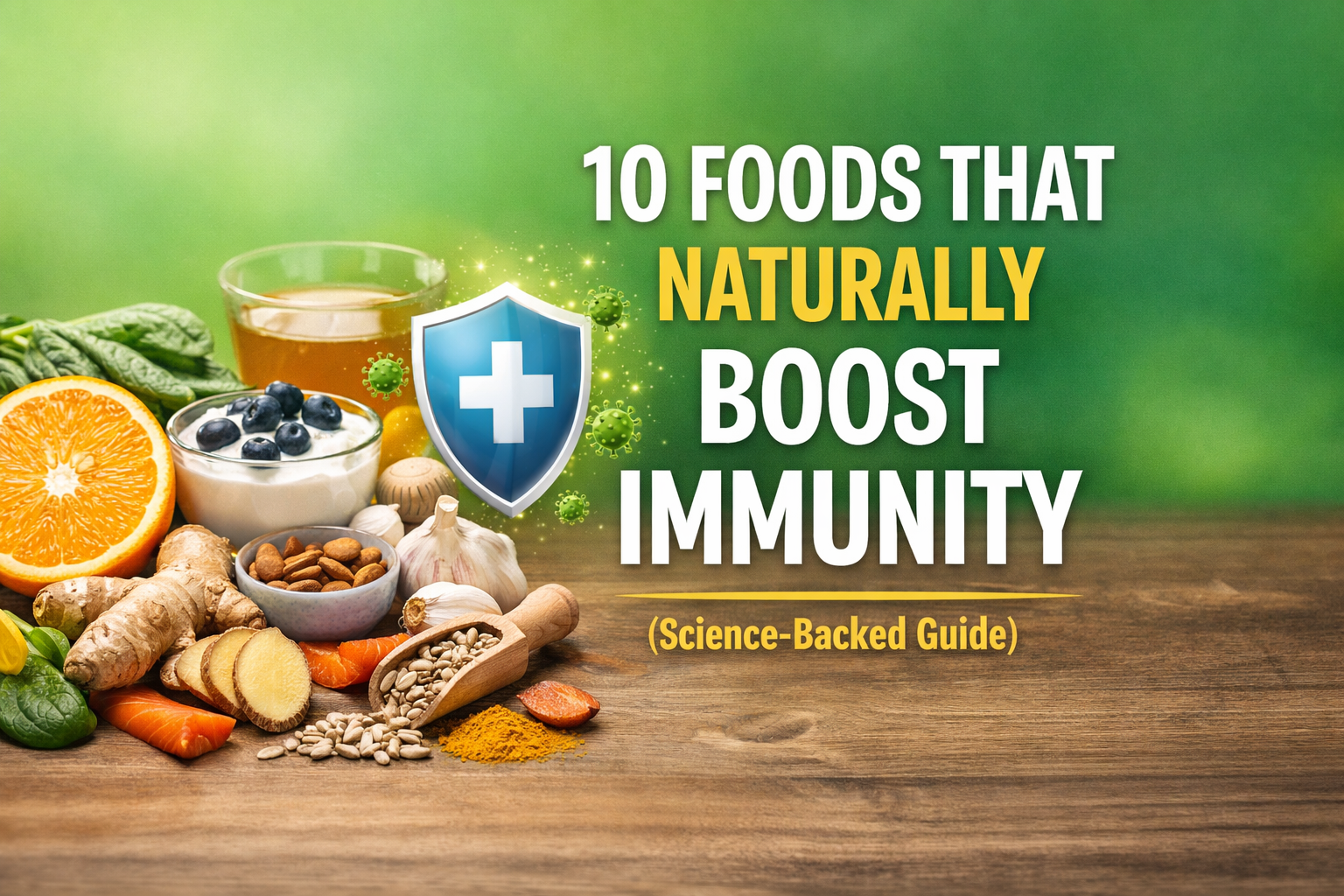
Your immune system works around the clock to protect your body from viruses, bacteria, and daily environmental stress. But your immune strength is not just genetic — it is heavily influenced by your daily habits and diet.
If you want long-term energy, better recovery, and fewer sick days, your food choices matter.
In this guide, we’ll explore 10 powerful foods that boost immunity naturally and explain why they work.
How Food Impacts Your Immune System
Your immune system depends on:
- Vitamins (C, D, A, E)
- Minerals (zinc, selenium, iron)
- Antioxidants
- Healthy gut bacteria
- Protein
Around 70% of your immune system is connected to your gut health. That’s why what you eat daily shapes your immunity more than occasional supplements.
If you already follow a strong morning routine for energy and focus, pairing it with immune-supportive foods multiplies your results.
1. Citrus Fruits
Examples:
- Oranges
- Lemons
- Grapefruit
- Sweet lime
Rich in Vitamin C, citrus fruits stimulate white blood cell production — your body’s main defense force.
Tip: Fresh is better than packaged juice.
2. Garlic
Garlic contains allicin, a compound known for antimicrobial and immune-supportive properties.
Benefits:
- Supports heart health
- Fights inflammation
- Enhances immune cell activity
Crushing garlic and letting it rest before cooking increases its benefits.
3. Ginger
Ginger helps reduce inflammation and oxidative stress.
It may:
- Reduce sore throat severity
- Improve digestion
- Support immune response
You can add it to tea, smoothies, or warm water.
Since chronic stress weakens immune response, combining a healthy diet with NATURAL STRESS MANAGEMENT TECHNIQUES creates stronger long-term protection.
4. Yogurt (With Live Cultures)
Your gut houses beneficial bacteria that regulate immune activity.
Choose:
- Plain yogurt
- Greek yogurt
- Traditional curd (India)
Avoid sugar-loaded versions.
5. Spinach
Spinach is loaded with:
- Vitamin C
- Beta carotene
- Antioxidants
Light cooking increases nutrient absorption.
Leafy greens are one of the best natural immunity boosters available.
6. Almonds
Vitamin E is critical for immune balance.
A handful of almonds provides:
- Healthy fats
- Antioxidants
- Immune-support nutrients
Soak overnight for better digestion.
7. Turmeric
Curcumin, the active compound in turmeric, has powerful anti-inflammatory properties.
For better absorption:
- Combine with black pepper
- Add to warm milk or food
Turmeric supports long-term immune resilience.
8. Green Tea
Rich in flavonoids and antioxidants.
Benefits:
- Supports immune defense
- Reduces inflammation
- Enhances metabolism
Choose unsweetened versions.
9. Sunflower Seeds
High in:
- Selenium
- Vitamin E
- Zinc
These nutrients are essential for immune cell function.
Seeds are easy to add to salads and smoothies.
10. Fatty Fish
Examples:
- Salmon
- Sardines
- Mackerel
Rich in:
- Omega-3 fatty acids
- Vitamin D
Vitamin D deficiency is linked to weak immune function. Fatty fish helps correct that naturally.
Bonus: Hydration Matters
Water helps:
- Flush toxins
- Transport nutrients
- Support lymphatic system
Without proper hydration, even the best foods won’t function optimally.
Sample Immunity-Boosting Daily Plate
Breakfast:
Yogurt + almonds + berries
Lunch:
Spinach + seeds + protein source
Dinner:
Vegetables + fatty fish or lentils
Snacks:
Citrus fruit or green tea
Simple. Sustainable. Effective.
Common Mistakes That Weaken Immunity
- High sugar intake
- Chronic stress
- Poor sleep
- Dehydration
- Ultra-processed foods
You can also improve immune strength by reducing stress naturally.
How Long Until Diet Improves Immunity?
If consistent:
- 1–2 weeks → Better digestion
- 3–4 weeks → Improved resilience
- 2–3 months → Stronger immune stability
Consistency beats occasional “detox” trends.
FAQ – Foods That Boost Immunity
What food boosts immunity fastest?
Vitamin C-rich fruits and probiotic foods show noticeable effects when consumed consistently.
Can diet alone improve immunity?
Diet plays a major role, but sleep, stress management, and exercise are equally important.
Are supplements necessary?
Whole foods are preferred. Supplements may help if deficiencies exist.
How often should I eat immune-boosting foods?
Daily inclusion in balanced meals is ideal.
Final Thoughts
Your immune system is built daily — not during flu season.
Instead of relying on quick fixes, focus on consistent nutrition.
Combine:
- A healthy diet
- A structured Morning Routine for Energy and Focus
- Good sleep
- Stress control
And your body becomes naturally resilient.



Leave a Reply