
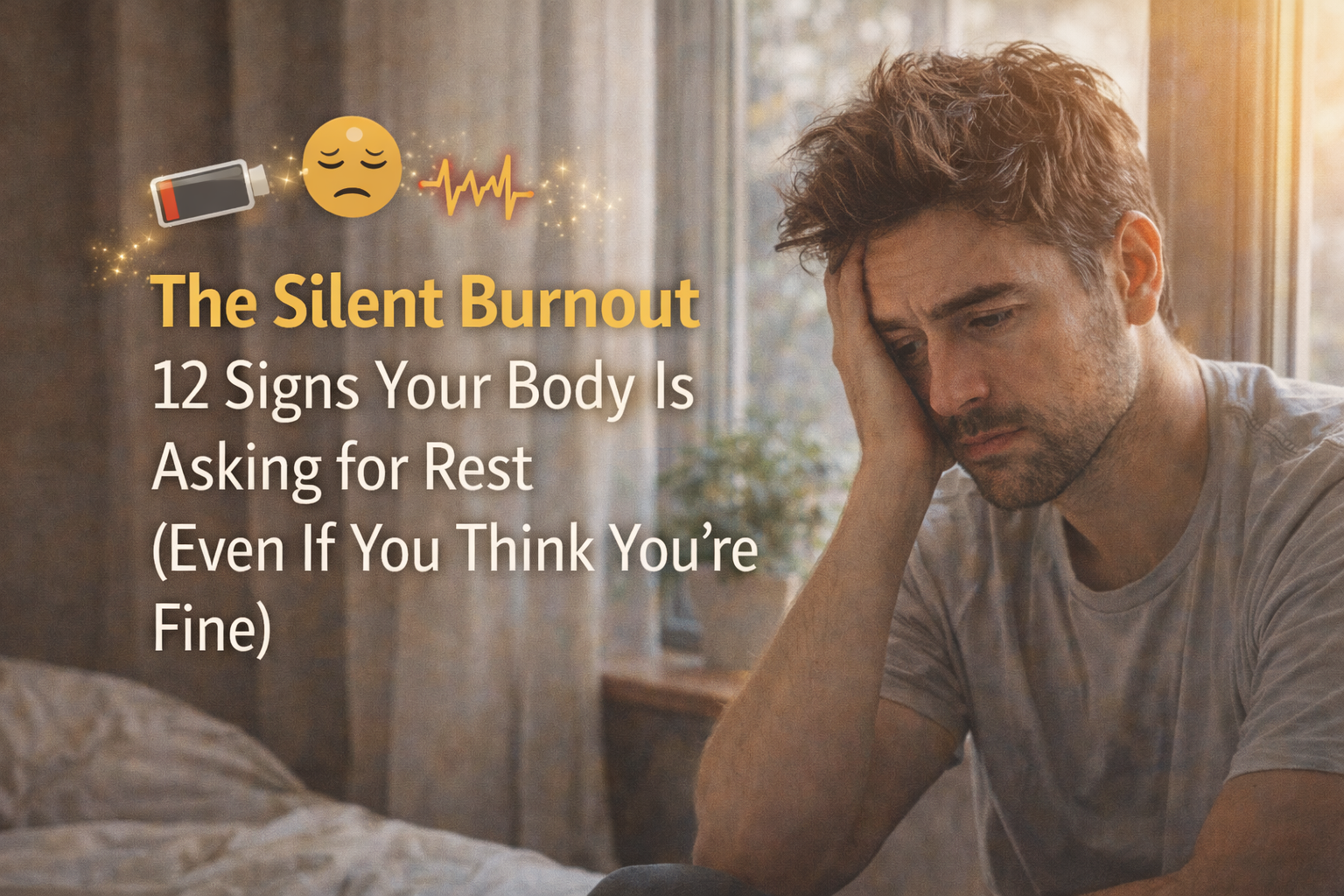
When Exhaustion Doesn’t Go Away: 12 Quiet Signs Your Body May Be Experiencing Burnout
Many people assume burnout looks dramatic — emotional breakdowns, quitting jobs, or obvious exhaustion. In reality, burnout often arrives quietly.
It hides behind busy schedules, constant notifications, and the pressure to keep moving forward.
You may still wake up every morning, complete responsibilities, and appear productive from the outside. Yet internally, something feels different.
Energy fades faster. Motivation disappears. Even rest stops feeling restorative.
If you have recently noticed mornings becoming heavier or your focus slipping away, it may help to revisit your daily habits first. Building a strong foundation through routines — like those discussed in Morning Routine That Changes Your Life can often reveal whether exhaustion comes from lifestyle imbalance or deeper burnout.
Below are twelve subtle signs your body may already be asking for recovery.
2. Everyday Tasks Suddenly Feel Heavy
Burnout drains mental energy long before physical exhaustion appears.
Simple decisions may feel overwhelming. Responding to messages or organizing schedules might take longer than usual.
You may notice yourself delaying tasks not because of laziness but because your mental resources feel limited.
3. Irritation Appears More Frequently
Emotional patience often decreases during burnout.
Small inconveniences may trigger frustration faster than before.
You might withdraw socially or feel emotionally tired after conversations.
This happens because the brain is conserving energy.
4. Brain Fog Interrupts Focus
Difficulty concentrating is one of the strongest early warnings.
You may reread sentences multiple times or forget details moments after hearing them.
Mental clarity depends heavily on recovery cycles.
If your mornings already begin in a rushed or reactive state, focus becomes harder to maintain throughout the day.
That is why rebuilding structured habits — similar to the approach discussed in Morning Routine That Changes Your Life often restores cognitive energy over time.
5. Motivation Quietly Disappears
Burnout rarely removes ability.
Instead, it removes enthusiasm.
Activities that once felt enjoyable may begin to feel like obligations.
Creative hobbies, workouts, or even social gatherings might require effort rather than excitement.
6. Physical Discomfort Without Clear Cause
Stress often communicates through the body.
Frequent headaches, neck stiffness, digestive discomfort, or unexplained fatigue can appear even when medical tests show no obvious issues.
Long periods of tension reduce recovery signals within muscles and organs.
7. Sleep Patterns Become Unpredictable
Some people experience insomnia.
Others wake repeatedly or much earlier than planned.
Even when tired, the mind continues processing unfinished thoughts.
Many of these patterns begin during the morning itself.
Checking emails immediately after waking or skipping hydration can disrupt natural rhythms — another reason why correcting habits highlighted in Morning Mistakes Most People Make becomes essential.
8. Emotional Detachment From Work or Responsibilities
Burnout sometimes feels like emotional distance.
Tasks continue getting completed, but satisfaction disappears.
You may stop celebrating achievements or feel disconnected from progress.
This emotional numbness is the brain’s protective response against prolonged stress.
9. Increased Dependence on Coffee or Sugar
Energy crashes often lead to quick fixes.
Extra caffeine or sugary snacks temporarily improve alertness but rarely address underlying fatigue.
If your day depends heavily on stimulants just to function, your body may already be compensating for exhaustion.
10. Frequent Illness or Slow Recovery
Chronic stress weakens immune response.
Repeated colds or slower healing can signal that recovery systems are overwhelmed.
Rest is not only emotional — it is biological maintenance.
11. Relaxation Feels Impossible
One surprising burnout symptom is difficulty relaxing.
Even during downtime, the mind keeps planning or worrying.
Scrolling endlessly or multitasking during breaks prevents true recovery.
Learning structured wind-down habits — much like building intentional routines discussed in Morning Routine That Changes Your Life can help retrain the brain toward rest.
12. Productivity Without Fulfillment
Perhaps the most overlooked signal is feeling busy yet emotionally empty.
You complete tasks.
You meet deadlines.
But satisfaction never arrives.
This disconnect often indicates that effort has exceeded recovery for too long.
How Can You Tell the Difference Between Burnout and Ordinary Tiredness?
Temporary fatigue improves after proper sleep or a relaxing weekend.
Burnout tends to stay longer.
If exhaustion affects mood, relationships, or focus for weeks at a time, your body may be asking for change rather than short breaks.
Start by examining daily routines.
Correcting foundational habits — including avoiding early-morning stress triggers discussed in Morning Mistakes Most People Make often creates noticeable improvement.
If symptoms continue, reducing workload, setting clearer boundaries, or speaking with a professional can help restore balance.
Listening early prevents deeper exhaustion later.
Common Mistakes People Make During Burnout
Trying Extreme Productivity Systems
Overloading routines worsens exhaustion.
Ignoring Emotional Signals
Mental fatigue often appears before physical illness.
Waiting Too Long
Recovery becomes harder when burnout deepens.
Early action matters.
FAQ — Burnout Recovery
How do I know if I’m burned out or just tired?
Burnout includes emotional exhaustion and reduced motivation alongside fatigue.
How long does recovery take?
Many people notice improvement within weeks after lifestyle changes.
Does sleep alone fix burnout?
Sleep helps but emotional stress management is equally important.
Should I stop working completely?
Most recovery happens through balanced routines rather than total withdrawal.
Final Thoughts
Burnout isn’t failure.
It’s feedback.
Your body asking for adjustment rather than punishment.
When rest becomes intentional instead of accidental, energy slowly rebuilds.
Small pauses.
Better sleep.
Gentle movement.
These choices create long-term resilience.
Listen early.
Recovery becomes easier.

Leave a Reply