
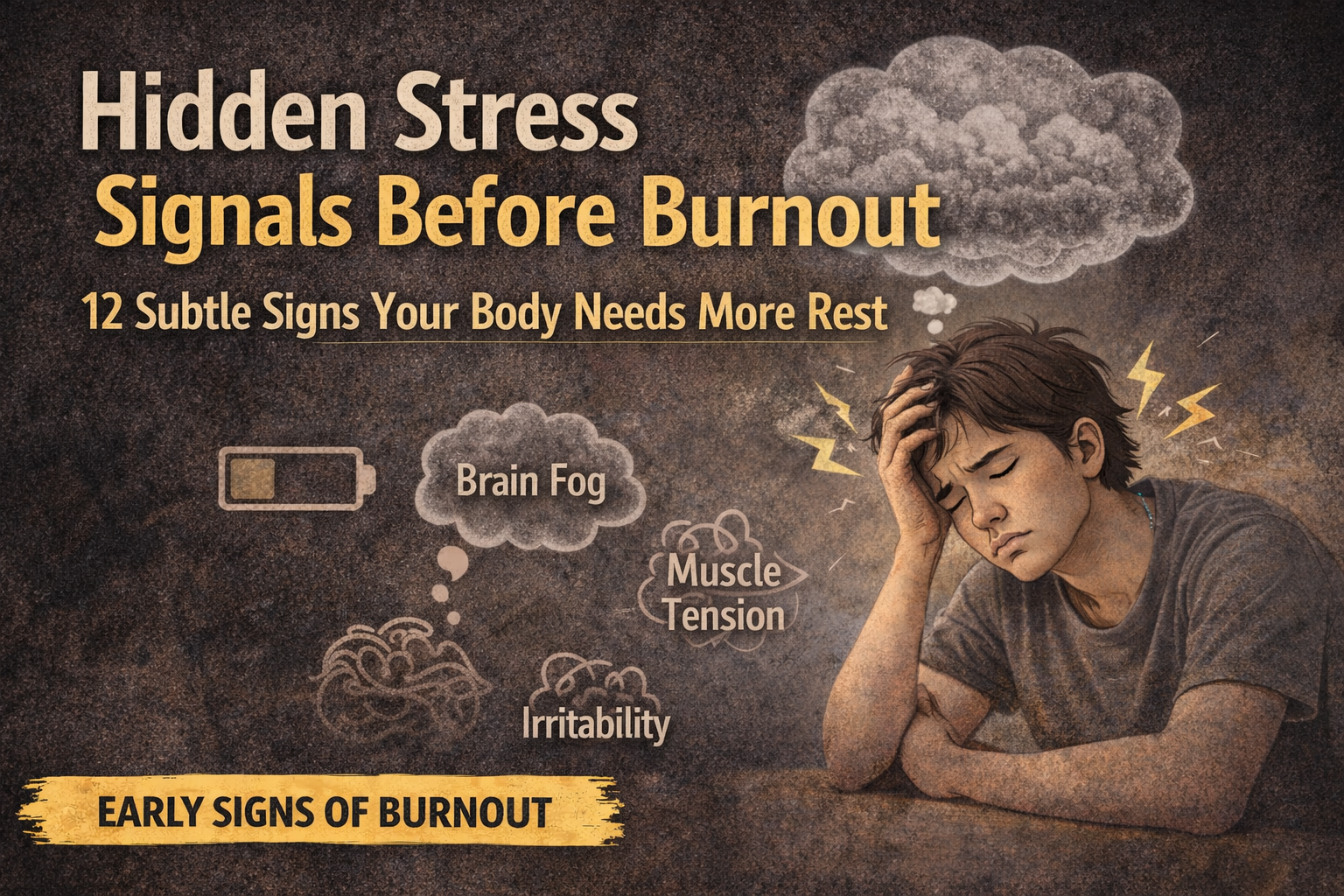
The Hidden Stress Signals Your Body Shows Before Burnout Happens
Most people imagine burnout as something dramatic. They picture complete exhaustion, quitting a job, or feeling unable to function. But the truth is very different. Burnout rarely begins with a major breakdown.
Instead, it often starts with small signals your body sends quietly. These signals appear in subtle ways—low energy, irritability, difficulty concentrating, or even unexplained physical tension.
Unfortunately, many people ignore these early warnings. They assume they are just tired, busy, or dealing with a temporary stressful period.
But when these signals continue for weeks or months, your body may actually be telling you something important:
Your system is under more pressure than it can comfortably manage.
Understanding these early signals can help you prevent deeper exhaustion and maintain long-term well-being.
In this article, we will explore the hidden stress signals your body often shows before burnout develops.
Why The Body Sends Stress Signals
The human body is designed to protect itself. When you face challenges, your nervous system activates what is commonly called the stress response. This response increases alertness, releases hormones, and prepares your body to deal with demanding situations.
In short bursts, this response is useful. However, when stress becomes constant, the body struggles to return to a calm state.
Instead of fully recovering, the body remains in a low-level state of tension. This is when subtle warning signs begin to appear. These signs are not meant to alarm you.
They are simply messages asking for balance and recovery.
1. Your Energy Feels Unstable During The Day
One of the earliest signals of growing stress is inconsistent energy levels.
You may feel energetic in the morning but suddenly crash in the afternoon.
Some people describe it as feeling mentally drained even after small tasks.
This happens because the body is using more energy to manage stress hormones.
Over time, the nervous system becomes fatigued.
If you often wake up feeling tired or experience frequent energy dips, your daily rhythm may need adjustment.
You can also explore Morning Routine That Changes Your Life to learn how simple morning habits can help stabilize energy throughout the day.
2. Small Tasks Start Feeling Overwhelming
When stress accumulates, mental clarity can decline.
Tasks that used to feel easy can begin to feel unexpectedly heavy or mentally draining.
You might find yourself:
• delaying tasks
• losing focus easily
• rereading the same sentence multiple times
• feeling mentally slow
This happens because the brain is trying to manage both external responsibilities and internal stress signals.
When the brain feels overloaded, productivity naturally slows down.
This is not laziness.
It is often a sign your mind needs recovery.
3. Your Sleep Becomes Less Refreshing
Many people think stress only affects daytime performance.
In reality, stress often disrupts sleep quality first.
You may notice patterns like:
• waking up during the night
• vivid or restless dreams
• waking earlier than planned
• feeling tired even after sleeping
Sleep is the body’s primary recovery system.
When stress interferes with deep sleep, the body cannot fully restore energy.
Over time, this creates a cycle where tiredness increases stress and stress further disrupts sleep.
4. Muscle Tension Appears Without Clear Reason
Another subtle stress signal appears in the body.
Many people experience unexplained muscle tension such as:
• tight shoulders
• stiff neck
• jaw clenching
• tension headaches
These symptoms occur because the nervous system is maintaining a protective posture.
Muscles remain slightly contracted instead of relaxing fully.
If this tension continues for long periods, discomfort and fatigue may increase.
Gentle stretching, movement, and relaxation can help release this built-up tension.
5. You Feel Irritable More Often
Stress does not only affect the body.
It also influences emotional balance.
You may notice yourself becoming impatient or irritated over small situations.
For example:
• minor inconveniences feel frustrating
• conversations feel draining
• background noise feels more distracting
This emotional sensitivity often appears when the brain is already managing a heavy load.
Instead of reacting calmly, the mind becomes more reactive.
Taking short breaks during the day can help reset emotional balance.
6. Your Motivation Feels Lower Than Usual
Motivation naturally fluctuates.
But when stress builds up, many people experience persistent lack of motivation.
Things you normally enjoy might slowly start to feel like something you have to do rather than something you want to do.
Even hobbies can start to feel tiring.
This does not mean your interests have disappeared.
It simply means your mental energy may be running low.
Giving yourself time to recharge can gradually restore motivation.
7. Concentration Becomes Difficult
The brain functions best when it alternates between focus and rest.
Constant pressure interrupts this rhythm.
You may notice:
• difficulty concentrating
• frequent mental distractions
• slower decision-making
Many people describe this state as brain fog.
If you experience this often, improving your daily rhythm may help.
You can also read Morning Mistakes Most People Make to understand how certain early habits may unintentionally reduce mental clarity during the day.
8. Social Interaction Feels More Draining
When energy levels drop, social activities may begin to feel exhausting.
You might prefer spending time alone more often.
Even conversations with friends may require more effort than usual.
This shift does not automatically mean that anything serious is happening.
It simply means your system may need time to recharge.
Balancing social time with personal recovery is important for long-term well-being.
9. Your Immune System Feels Weaker
Chronic stress can gradually influence the immune system.
Some people notice they catch colds more frequently or take longer to recover from illness.
This happens because the body is redirecting energy toward managing stress rather than supporting immune defense.
While occasional illness is normal, frequent fatigue combined with recurring sickness may indicate your body needs deeper recovery.
10. You Feel Busy But Not Productive
Another common signal of hidden stress is the feeling of being constantly busy without meaningful progress.
You may spend the entire day working yet feel like little was accomplished.
This can happen when mental fatigue reduces focus and decision-making speed.
Taking structured breaks and organizing tasks can help restore productivity.
11. Your Mind Feels Constantly Active
Stress often keeps the mind active even during quiet moments.
You may notice:
• overthinking small situations
• replaying conversations in your head
• planning tasks late at night
This continuous mental activity prevents the brain from fully resting.
Simple relaxation practices like slow breathing, walking outdoors, or limiting late-night screen exposure can help calm the nervous system.
12. You Rarely Feel Fully Relaxed
Perhaps the clearest signal of growing stress is the inability to fully relax.
Even during free time, your mind may remain alert.
Instead of feeling refreshed after rest, you may feel slightly tense or distracted.
True relaxation allows the nervous system to return to balance.
When relaxation becomes difficult, it may be time to adjust your routine.
How To Respond To Early Stress Signals
The goal is not to eliminate stress completely.
A certain amount of pressure is simply part of everyday living.
However, balance is essential.
Several simple habits can support recovery:
• maintaining consistent sleep schedules
• spending time outdoors
• reducing excessive screen exposure
• taking regular breaks during work
• practicing slow breathing or mindfulness
Small adjustments often create meaningful improvements.
The Importance Of Listening To Your Body
One of the most powerful habits you can develop is awareness of your body’s signals.
Many people push through fatigue for long periods before recognizing the need for rest.
But the body continuously provides feedback.
Energy changes, muscle tension, emotional shifts, and sleep patterns all carry useful information.
When you learn to recognize these signals early, it becomes easier to restore balance before burnout develops.
Frequently Asked Questions
How do I know if I am stressed or burned out?
Stress usually appears as temporary pressure or fatigue.
Burnout develops when stress continues for long periods without enough recovery.
If exhaustion, low motivation, and sleep disruption persist for weeks, your body may be asking for deeper rest.
Can daily routines reduce stress?
Yes.
Consistent daily habits help regulate the body’s internal rhythm.
Morning light exposure, hydration, movement, and balanced meals can all support emotional and physical stability.
How long does recovery from stress usually take?
Recovery time varies for each person.
Some people feel improvement after a few days of rest, while others may require longer periods of lifestyle adjustment.
Listening to your body and gradually restoring balance is the most sustainable approach.
Final Thoughts
Stress rarely arrives suddenly.
More often, it builds quietly through small daily pressures.
The body responds by sending subtle signals—changes in energy, sleep, mood, and focus.
These signals are not signs of weakness.
They are simply reminders that balance matters.
By paying attention to these early messages, you can adjust your routine, restore your energy, and protect your long-term well-being.
Leave a Reply