
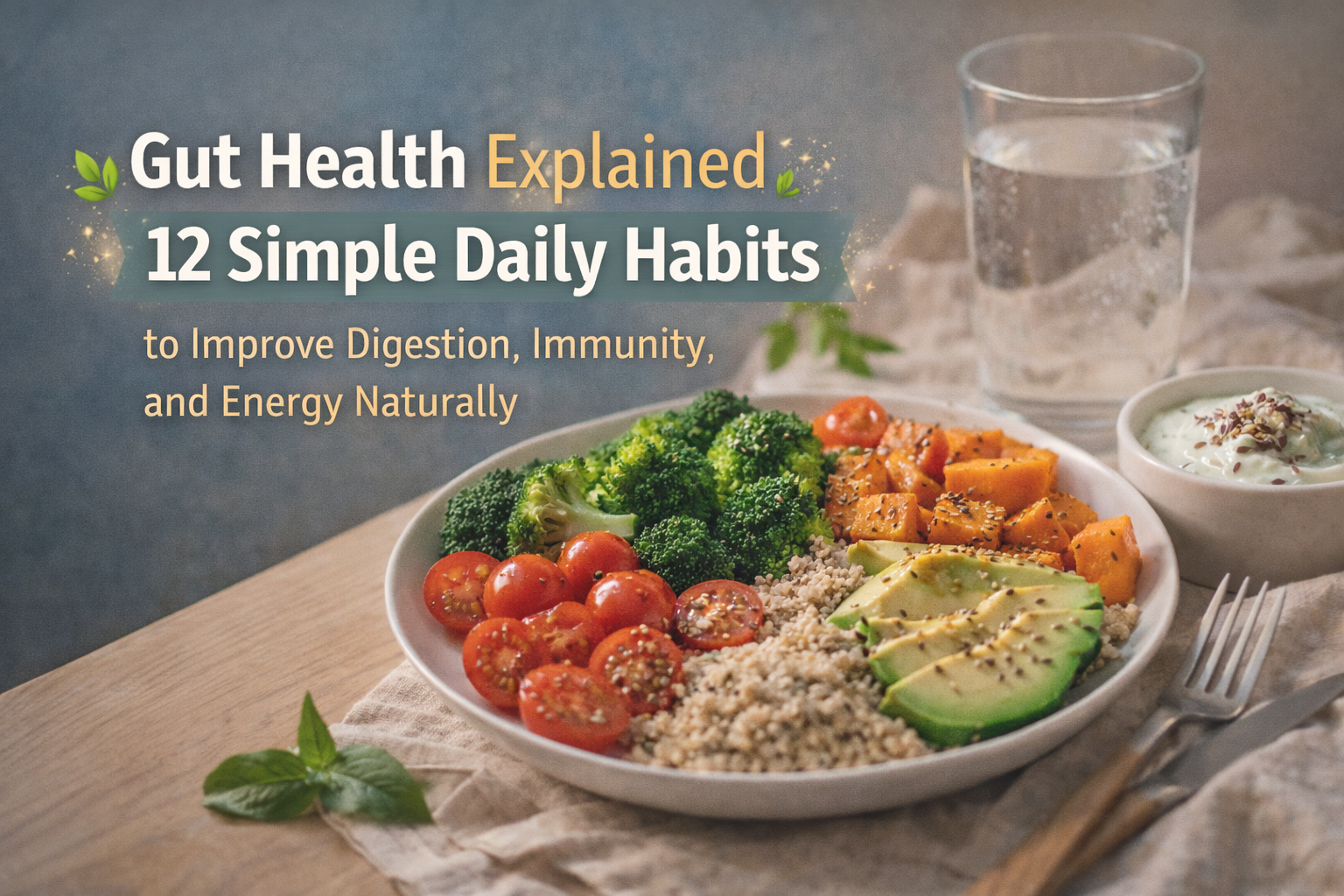

Gut Health Explained: 12 Simple Daily Habits to Improve Digestion, Immunity, and Energy Naturally
If you constantly feel tired, bloated, anxious, or struggle with poor sleep, the real problem might not be stress or workload.
It could be your gut.
Modern science now calls the gut the “second brain” because it influences digestion, immunity, hormones, mood, and even mental clarity.
Inside your digestive system live trillions of bacteria known as the microbiome. When balanced, they support health quietly in the background.
When disrupted — they create inflammation, fatigue, anxiety, and digestive discomfort.
The best part?
Improving gut health doesn’t require extreme diets or expensive supplements.
Small daily habits can transform digestion and overall wellness naturally.
Here are 12 powerful habits to build a healthier gut starting today.
1. Start Your Day With Warm Water
Your digestive system slows overnight.
Drinking warm water in the morning gently activates digestion and prepares your stomach for food.
Benefits include:
- Improved bowel movement.
- Reduced acidity.
- Better hydration absorption.
Add lemon occasionally for freshness if tolerated.
morning hydration habits strongly overlap.
Morning routines shape metabolism throughout the day.
2. Eat Fiber — But Increase Slowly
Fiber feeds good bacteria.
Foods rich in fiber include:
- Fruits
- Vegetables
- Lentils
- Whole grains
- Seeds
However, increasing fiber suddenly can cause bloating.
Instead:
Increase gradually.
Your microbiome adapts slowly.
Aim for variety rather than quantity.
Different bacteria thrive on different fibers.
3. Chew Your Food Properly
Many digestive problems start before food even reaches the stomach.
Fast eating causes:
- Gas
- Poor nutrient absorption
- Overeating.
Digestion begins in the mouth through saliva enzymes.
Try this habit:
Chew each bite longer than usual.
Put your spoon down between bites.
You’ll notice fullness faster and less discomfort.
Small behavioral habits often outperform complicated diets.
4. Reduce Ultra-Processed Foods
Convenience foods are often low in fiber and high in additives.
Excess sugar and preservatives disrupt gut bacteria balance.
Signs your gut dislikes processed foods:
- Brain fog
- Energy crashes
- Skin breakouts.
Instead of sudden elimination:
Replace gradually.
Examples:
- Homemade snacks instead of packaged ones.
- Nuts instead of fried snacks.
Consistency matters more than restriction.
Simple Healthy Eating Habits for Busy Lifestyles.
5. Move After Meals
One of the simplest digestion secrets is movement.
A 10–15 minute walk after meals helps:
- Reduce bloating.
- Improve blood sugar balance.
- Support nutrient absorption.
Heavy workouts immediately after eating aren’t required.
Gentle walking works best.
This also improves mental relaxation after long work hours.
Best Beginner Home Workouts for Busy People.
Movement habits support both gut and mental health.
6. Manage Stress — Your Gut Feels Everything
Stress directly slows digestion.
When stressed, the body prioritizes survival instead of food processing.
Common symptoms:
- Constipation
- Acid reflux
- Appetite changes.
Daily stress management helps gut bacteria thrive.
Simple practices:
- Breathing exercises.
- Quiet walks.
- Journaling.
10 Powerful Daily Habits That Naturally Reduce Stress and Improve Mental Health
Gut health and stress are deeply connected.
7. Sleep Is the Hidden Digestive Reset Button
Poor sleep damages gut balance faster than most people realize.
Late night scrolling disrupts circadian rhythms.
Gut bacteria follow sleep cycles.
Improve sleep hygiene:
- Avoid heavy meals late.
- Reduce screens before sleep.
- Maintain fixed sleeping hours.
Many digestion problems improve after sleep correction alone.
Night Routine Habits for Deep Sleep and Better Productivity.
8. Include Fermented Foods Weekly
Fermented foods introduce beneficial bacteria.
Examples:
- Yogurt.
- Buttermilk.
- Pickled vegetables.
- Fermented rice dishes.
You don’t need supplements immediately.
Traditional foods already support gut health naturally.
Start small.
Observe tolerance.
Everyone’s digestion differs.
9. Drink Enough Water — But Not During Meals
Hydration helps fiber work effectively.
However drinking excessive water during meals may dilute digestive enzymes for some people.
Better approach:
- Drink water between meals.
- Sip small amounts if needed during meals.
Signs of dehydration include:
- Constipation.
- Headaches.
- Dry skin.
Water quietly supports detoxification.
10. Avoid Constant Snacking
Your gut needs rest periods.
Constant eating prevents digestive repair cycles.
Try spacing meals 3–4 hours apart.
This allows natural cleaning processes inside the intestine.
Many people notice reduced bloating within weeks.
Mindful eating schedules improve metabolism naturally.
11. Spend Time Outdoors
Nature exposure benefits digestion indirectly.
Sunlight regulates:
- Sleep hormones.
- Vitamin D.
- Mood stability.
Vitamin D deficiency often correlates with gut imbalance.
Even balcony sunlight helps.
Fresh air reduces stress hormones which influence digestion.
Digital Detox Strategies for Better Mental Health.
Outdoor breaks reduce both mental and digestive overload.
12. Listen to Your Body Signals
The biggest gut health mistake?
Ignoring discomfort.
Symptoms like:
- Frequent acidity.
- Chronic bloating.
- Sudden food intolerance.
Are communication signals.
Instead of suppressing symptoms repeatedly:
Observe patterns.
Ask:
- Which foods trigger discomfort?
- Does stress worsen digestion?
Awareness builds personalized health routines.
No single diet suits everyone.
Why Gut Health Affects Mental Wellness
Scientists increasingly study the gut-brain connection.
Gut bacteria produce neurotransmitters influencing mood.
When gut balance improves:
- Anxiety may reduce.
- Energy stabilizes.
- Focus improves.
This explains why digestion problems often appear alongside emotional stress.
Healthy digestion supports emotional resilience.
Common Gut Health Mistakes People Make
Avoid these:
Extreme Detox Diets
Sudden restriction harms bacteria diversity.
Overusing Supplements
Food habits matter more long term.
Ignoring Sleep
Late nights worsen digestion quickly.
Eating Too Fast
Stress eating disrupts enzyme activity.
Balance beats perfection.
How Long Until You See Results?
Gut improvement happens gradually.
Typical timeline:
Week 1 → Reduced heaviness.
Week 2 → Better bowel movement consistency.
1 Month → Improved energy levels.
3 Months → Noticeable immunity and mood improvement.
Consistency compounds results.
Frequently Asked Questions (FAQ)
What is the fastest way to improve gut health naturally?
Increasing fiber slowly, improving sleep, and reducing stress together produce noticeable changes within weeks.
Are probiotics necessary?
Not always. Many people improve digestion through fermented foods and balanced meals alone.
Does stress really affect digestion?
Yes. Stress hormones slow digestion and change gut bacteria composition.
Daily Habits That Naturally Reduce Stress and Improve Mental Health.
Can gut health improve immunity?
Around 70% of immune activity connects to gut bacteria, making digestive balance essential for defense against illness.
Should I avoid all junk food?
Occasional treats are fine. Long-term habits matter more than strict restrictions.
Final Thoughts
Gut health is not about perfection or complicated diets.
It’s about rhythm.
Eating slowly.
Sleeping consistently.
Moving regularly.
Managing stress.
When daily habits support digestion, the body rewards you with better energy, stronger immunity, clearer thinking, and emotional stability.
Start small.
Stay patient.
Your gut adapts — and your entire life benefits.


Leave a Reply