
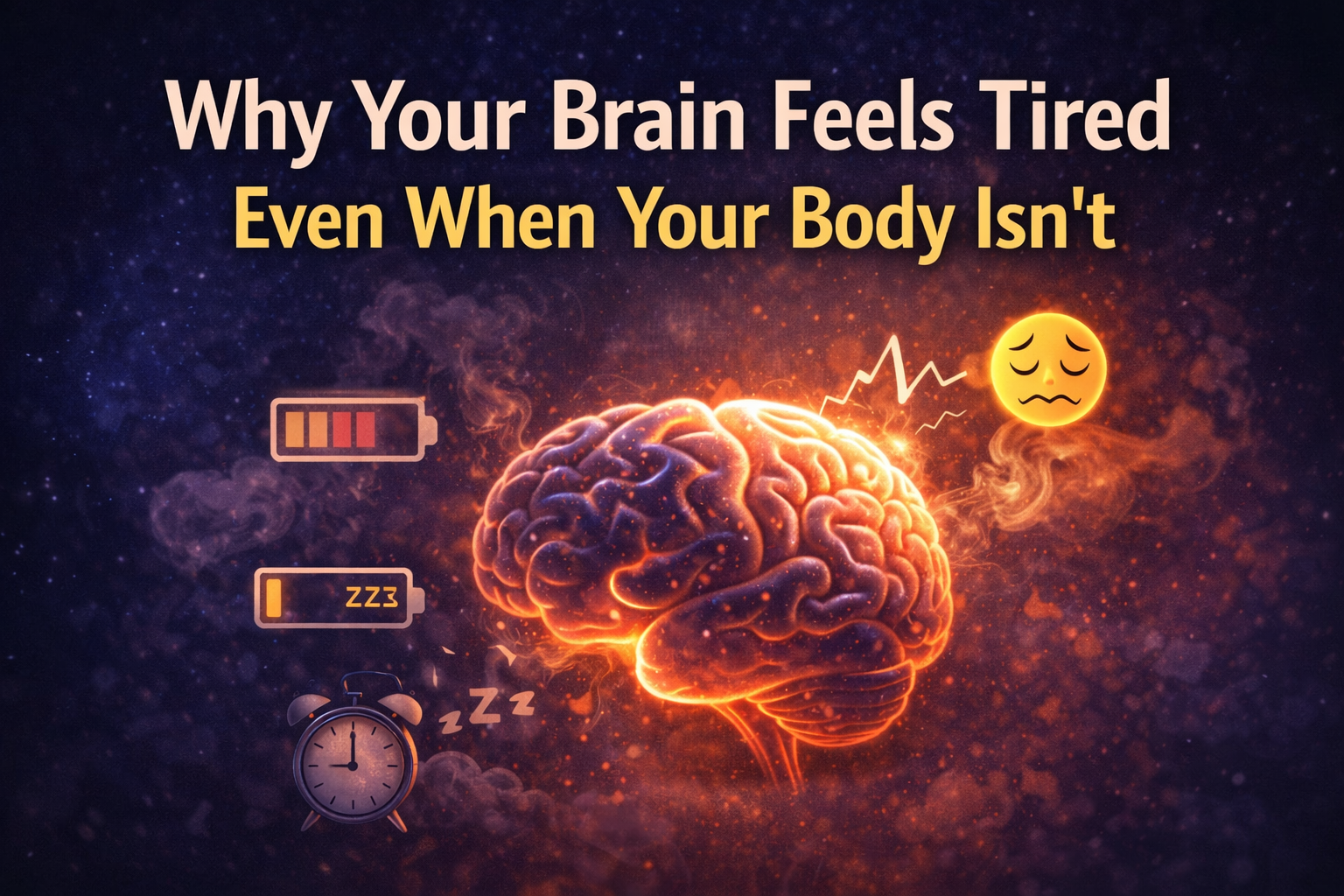
Why Your Brain Feels Tired Even When Your Body Isn’t

Many people experience a strange kind of tiredness.
Your body feels physically fine. You are not sick, you are not exhausted from exercise, and you may have even slept reasonably well.
Yet your mind feels drained.
Simple tasks feel mentally heavy. Concentrating becomes difficult, and even small decisions require more effort than usual.
This experience is often described as mental fatigue.
Unlike physical tiredness, mental fatigue affects the brain’s ability to focus, think clearly, and process information.
Understanding why this happens can help you restore clarity and energy in a healthy way.
In this article, we will explore the reasons your brain can feel tired even when your body still has energy.
What Is Mental Fatigue?
Mental fatigue occurs when the brain has been processing information, making decisions, or managing stress for extended periods.
Your brain consumes a significant amount of energy each day.
In fact, although it represents a small portion of body weight, it uses a large share of the body’s energy resources.
When the brain works continuously without adequate recovery, mental performance begins to decline.
You may notice symptoms like:
• difficulty focusing
• slower thinking
• forgetfulness
• lack of motivation
• increased irritability
These signals often indicate that the brain needs rest, balance, or a change in routine.
1. Constant Information Overload
Modern lifestyles expose the brain to more information than ever before.
Notifications, emails, social media, news updates, and digital conversations all compete for attention.
Your brain must constantly filter, analyze, and respond to these inputs.
Over time, this continuous processing can drain mental energy.
Even if your body is physically relaxed, your brain may still be working hard behind the scenes.
Taking regular breaks from digital stimulation can help restore mental clarity.
2. Decision Fatigue
Every day, people make hundreds of decisions.
Some are small choices, like what to eat or what to wear. Others involve work responsibilities, planning, or problem solving.
Each decision requires mental energy.
When the brain repeatedly evaluates options throughout the day, it gradually becomes less efficient.
This condition is often called decision fatigue.
As the day progresses, your brain may begin to feel tired even though your body feels fine.
Simplifying routines and reducing unnecessary decisions can help preserve mental energy.
3. Poor Sleep Quality
Sleep is essential for mental recovery.
While you sleep, the brain sorts information from the day, balances emotional responses, and removes built-up waste from its cells.
If sleep quality is poor, the brain may not complete these processes effectively.
Even if you spend enough time in bed, interruptions or shallow sleep can reduce mental restoration.
You can explore common nighttime habits that interfere with sleep in
Evening Habits That Ruin Your Sleep.
Improving nighttime routines can often lead to clearer thinking during the day.
4. Emotional Stress
Emotional stress requires significant mental energy.
When you are worried, anxious, or under pressure, the brain remains in a heightened state of alertness.
It constantly analyzes situations and prepares responses.
This ongoing mental activity can quietly exhaust the brain.
Sometimes people do not even realize how much energy stress is consuming.
If these signals continue for long periods, the body may start showing early warning signs.
You can learn more about these signals in Hidden Stress Signals Before Burnout.
5. Lack of Mental Breaks
The brain performs best when it alternates between periods of focus and rest.
Working continuously for hours without breaks reduces efficiency.
Mental fatigue accumulates when the brain never gets a chance to reset.
Short breaks can significantly improve concentration and productivity.
Even brief pauses—such as standing up, stretching, or taking a short walk—can help refresh the mind.
6. Poor Daily Energy Rhythm
Your body follows natural cycles of energy throughout the day.
Some people feel most alert in the morning, while others reach peak focus later.
When daily routines conflict with these natural rhythms, the brain may feel drained faster.
Morning habits can strongly influence mental clarity.
If you want to strengthen your daily rhythm, you may also read Morning Routine That Changes Your Life.
Simple morning adjustments can improve energy levels throughout the entire day.
7. Multitasking Too Frequently
Many people believe multitasking improves productivity.
In reality, the brain is not designed to perform multiple complex tasks simultaneously.
Instead, it switches rapidly between tasks.
This constant switching forces the brain to repeatedly re-focus, which consumes more energy.
As a result, multitasking often leads to faster mental exhaustion.
Focusing on one task at a time can help the brain conserve energy and work more efficiently.
8. Lack of Physical Movement
Although mental fatigue affects the brain, physical activity plays an important role in mental health.
Movement increases blood circulation and oxygen supply to the brain.
Remaining seated for extended hours can gradually lower mental alertness and make it harder to stay focused.
Regular movement—even simple walking—can help refresh mental energy and improve mood.
9. Irregular Work and Rest Patterns
If work periods are unpredictable or extend late into the night, the brain may struggle to maintain consistent energy levels.
Irregular schedules can disrupt the body’s internal rhythm.
Over time, this may cause mental tiredness even when physical energy remains stable.
Maintaining structured routines helps the brain know when to focus and when to recover.
10. Ignoring Early Signs of Mental Exhaustion
Mental fatigue rarely appears suddenly.
Instead, it often develops gradually.
Early signals may include:
• losing focus quickly
• needing longer breaks
• feeling mentally slow
• becoming easily distracted
Recognizing these signs early can help prevent deeper exhaustion.
Ignoring them for too long may eventually lead to burnout.
Simple Ways to Restore Mental Energy
Fortunately, mental fatigue can often be improved through small daily changes.
Some helpful strategies include:
• taking short breaks between work sessions
• reducing unnecessary digital notifications
• improving sleep routines
• spending time outdoors
• practicing relaxation techniques
These habits help the brain recover and maintain long-term focus.
Frequently Asked Questions
Why does my brain feel tired even after sleeping?
Mental fatigue can result from stress, excessive information processing, or poor sleep quality. Even if you sleep long enough, the brain may not fully recover if sleep is disrupted.
Can mental fatigue affect productivity?
Yes. Mental fatigue can reduce concentration, slow thinking speed, and make decision-making more difficult.
How much time does the brain need to recover from mental fatigue?
Recovery time varies depending on the cause. For many people, improving sleep, reducing stress, and taking regular breaks can help restore mental clarity within a few days.
Final Thoughts
In today’s fast-paced digital world, mental exhaustion is affecting more people than ever.
Even when the body feels physically capable, the brain may become overwhelmed by constant stimulation, stress, and decision-making.
Recognizing the difference between physical tiredness and mental exhaustion is an important step toward maintaining balance.
By adjusting daily routines, reducing unnecessary mental load, and giving the brain time to recover, you can restore focus and improve overall well-being.

Leave a Reply