
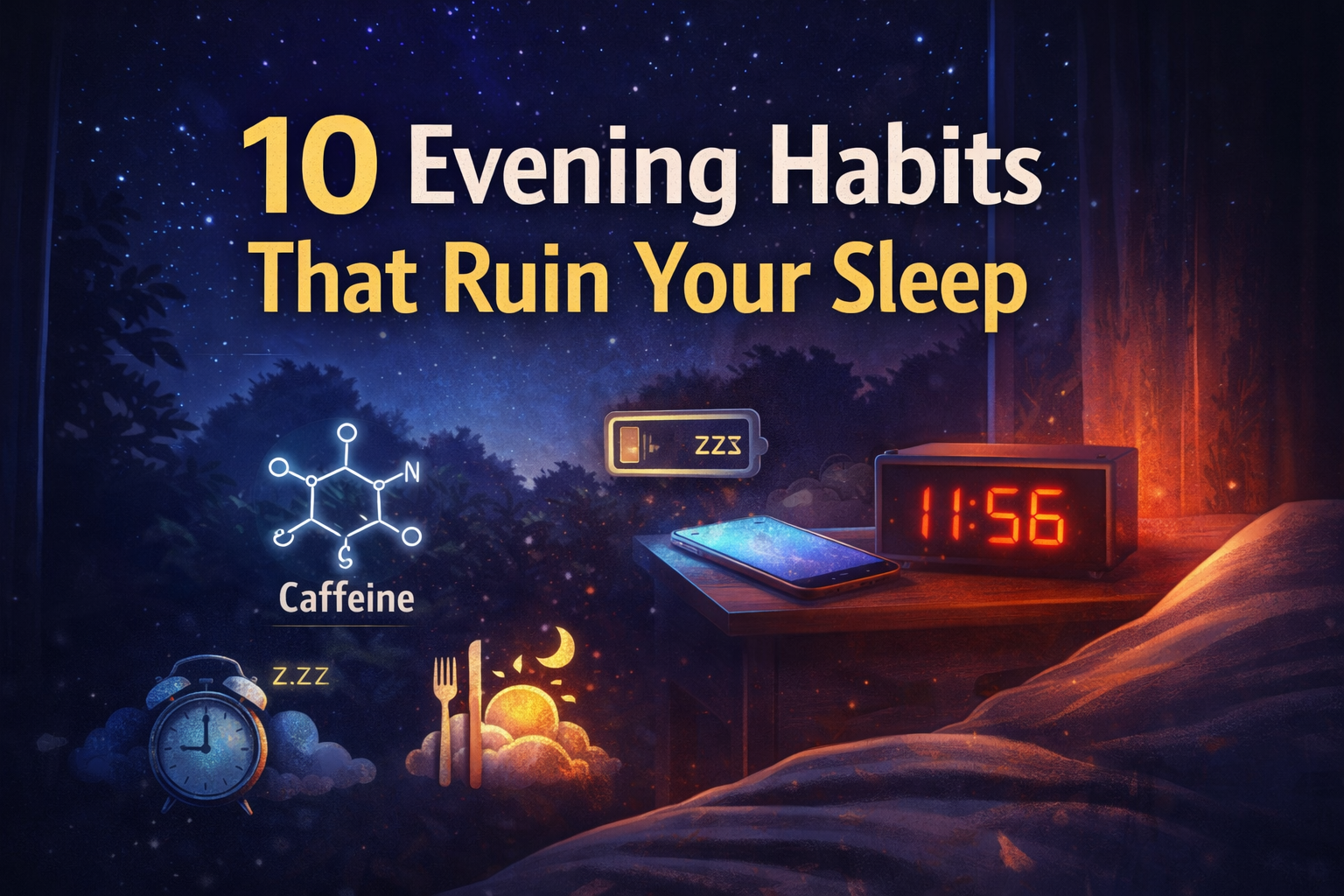
The Evening Habits That Quietly Ruin Your Sleep Without You Realizing It

Many people believe sleep problems start in the bedroom.
They assume poor sleep is caused by uncomfortable mattresses, noisy environments, or simply going to bed too late.
But sleep experts often explain something surprising:
The quality of your sleep is mostly determined by what you do in the hours before bedtime.
Your evening routine plays a powerful role in preparing your brain and body for rest. Certain habits can help your nervous system relax and move smoothly into deep sleep. Other habits, however, quietly keep the mind alert and prevent the body from fully recovering overnight. Unfortunately, many of these habits are extremely common in modern lifestyles. People follow them every evening without realizing they are interfering with their sleep quality.
In this article, we will explore the evening habits that can silently disrupt your sleep and what you can do instead to support deeper rest.
Why Evening Habits Matter So Much
Sleep is not a switch that turns on the moment you lie down.
Your brain gradually prepares for sleep throughout the evening.
During this time, the body begins to:
• slow down brain activity
• release sleep hormones
• lower body temperature
• relax the nervous system
If your evening activities stimulate the brain too much, this process becomes interrupted.
Instead of preparing for sleep, your brain stays in an alert and active state.
This makes it harder to fall asleep and reduces the depth of your sleep cycles.
Creating a calm evening routine helps signal to your body that it is time to recover.
1. Using Your Phone Right Before Bed
One of the most common sleep disruptors is late-night screen use.
Phones, tablets, and laptops emit blue light, which can interfere with the production of melatonin.
Melatonin is the hormone responsible for helping your body prepare for sleep.
When melatonin production decreases, the brain receives the signal that it should stay awake.
Even more important than the light itself is the mental stimulation these devices create.
Scrolling through news, messages, or social media keeps the brain engaged.
This mental activity can delay the transition into sleep.
Reducing screen exposure during the final hour before bed can significantly improve sleep quality.
2. Consuming Caffeine Late In The Afternoon Or Evening
Caffeine remains in the body much longer than many people realize.
For some individuals, caffeine can stay active in the bloodstream for six to eight hours.
This means a late afternoon coffee may still be affecting your sleep at night.
Caffeine blocks certain chemicals in the brain that promote sleepiness.
As a result, the body remains more alert than it should be during the evening.
If you struggle with falling asleep, try limiting caffeine consumption after early afternoon.
3. Overthinking The Day
Another common evening habit that affects sleep is mental overactivity.
Many people spend their bedtime hours replaying conversations, worrying about tasks, or planning tomorrow’s responsibilities.
When the mind remains busy, the nervous system stays in a problem-solving mode.
This prevents the relaxation needed for sleep.
Practices such as journaling, gentle breathing exercises, or light reading can help calm the mind.
These activities encourage the brain to gradually slow down.
4. Eating Heavy Meals Late At Night
Eating a large meal close to bedtime can also disrupt sleep.
The digestive system must remain active to process the food.
Because of this, the body may struggle to settle into a calm and restful state.
Some people experience symptoms such as:
• stomach discomfort
• acid reflux
• restlessness during sleep
Allowing two to three hours between dinner and bedtime often improves sleep comfort.
5. Inconsistent Sleep Schedules
Your body operates on an internal clock called the circadian rhythm.
This rhythm regulates sleep and wake cycles.
When you go to sleep at different times each night, the internal clock becomes confused.
As a result, your body may struggle to predict when it should begin preparing for sleep.
Maintaining a consistent bedtime helps your brain develop a reliable rhythm.
Over time, this can make falling asleep much easier.
6. Too Much Evening Stimulation
High-energy activities late at night can keep the brain overly alert.
Examples include:
• intense gaming
• stressful work tasks
• emotionally charged conversations
These activities activate the body’s stress response.
Instead of relaxing, your nervous system remains in an active state.
Replacing stimulating activities with calming ones can support better sleep.
Examples include stretching, listening to music, or quiet reading.
7. Skipping Evening Relaxation Time
Modern routines often move quickly from work tasks directly into bedtime.
Without a transition period, the brain may struggle to slow down.
Your body benefits from a short wind-down period before sleep.
Even 20–30 minutes of quiet time can help shift the nervous system into a calmer state.
This relaxation period acts as a bridge between daily activity and restorative sleep.
8. Checking Work Messages Late At Night
For many people, work responsibilities extend into the evening through emails or messages.
Checking work notifications late at night can trigger stress responses.
Your brain may begin thinking about deadlines, responsibilities, or unresolved tasks.
This mental activation makes it harder to relax.
Setting clear boundaries around work communication can protect your sleep quality.
9. Ignoring Physical Tension
Stress from the day often remains stored in the body.
Tight shoulders, stiff neck muscles, and general tension can carry into bedtime.
If the body remains physically tense, falling asleep becomes more difficult.
Gentle stretching, light yoga, or slow breathing exercises can release this tension.
Relaxing the body helps the brain recognize that it is safe to rest.
10. Spending Too Much Time In Bed Awake
If you frequently lie in bed while scrolling your phone or watching videos, your brain may begin associating the bed with wakefulness rather than sleep.
Over time, this weakens the mental connection between your bed and rest.
Sleep experts often recommend using the bed primarily for sleeping.
This strengthens the brain’s association between the bedroom and relaxation.
How Your Morning Habits Influence Your Nighttime Sleep
Sleep quality is influenced not only by evening habits but also by what happens earlier in the day.
Morning routines help regulate energy, mood, and mental clarity.
Healthy morning habits can improve the body’s natural rhythm and support better sleep later at night.
If you want to strengthen your daily routine, you may also explore
Morning Routine That Changes Your Life which explains how simple morning habits can improve energy and focus throughout the day.
Similarly, avoiding poor morning behaviors can help stabilize your daily rhythm. You can read Morning Mistakes Most People Make to understand which habits may be quietly draining your energy.
When Poor Sleep Becomes A Warning Sign
Occasional sleep disruption is normal.
However, persistent sleep problems may signal deeper stress or fatigue.
If your body constantly feels tired even after sleeping, it may be asking for deeper recovery.
You can learn more about these early warning signals in Hidden Energy Crisis: Signs Your Body Needs Real Rest where we explain how unnoticed exhaustion can develop over time.
Recognizing these signs early can help you restore balance before more serious fatigue appears.
Simple Habits That Improve Evening Relaxation
Creating a calm evening routine does not require complicated changes.
Small adjustments can produce powerful improvements.
Some helpful habits include:
• dimming lights during the evening
• reducing screen exposure before bed
• practicing gentle stretching
• reading calming material
• listening to relaxing music
Consistency is the key factor.
When the body experiences the same calming signals each night, it begins preparing for sleep naturally.
Frequently Asked Questions
How long before bed should I stop using my phone?
Experts often recommend avoiding screens for at least 30–60 minutes before bedtime.
This allows melatonin production to increase naturally.
Can evening routines really improve sleep quality?
Yes.
Consistent evening habits help train the brain to recognize when it is time to rest.
Over time, this can significantly improve sleep depth and recovery.
What is the best bedtime routine?
A helpful routine usually includes calm activities such as light reading, stretching, journaling, or quiet reflection.
The goal is to help the brain gradually transition from activity to rest.
Final Thoughts
Sleep is one of the most powerful tools your body has for recovery.
Yet many people unintentionally disrupt their sleep through everyday evening habits.
Small behaviors—like checking phones late at night, drinking caffeine too late, or staying mentally active—can quietly reduce sleep quality.
The good news is that even small routine changes can noticeably improve sleep quality.
By creating a calm evening routine and giving your body time to unwind, you allow your brain to move naturally into restorative sleep.
Better sleep supports better energy, clearer thinking, and improved well-being throughout the day.


Leave a Reply